



















Solar Carport EV Charging System
Integrated solar generation and EV charging for commercial parking infrastructure.
◆
Солнечные фотоэлектрические системы
Solar panels installed on the carport canopy generate electricity from available solar resources.
◆
PV Inverter
Converts solar-generated DC electricity into usable AC power.
◆
EV Chargers
AC and DC charging systems deliver electricity to parked electric vehicles.
◆
Electrical Distribution
Connects solar generation, EV chargers and the site’s existing electrical infrastructure.
◆
Optional BESS
Battery storage can be integrated for projects requiring peak shaving, energy shifting or increased solar utilization.
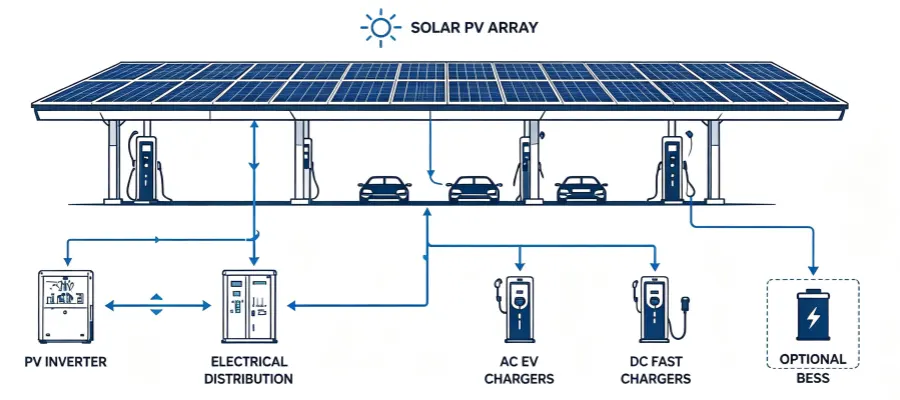
How Does a Solar Carport EV Charging System Work?
Solar Generation
Photovoltaic panels installed on the carport canopy generate electricity during daylight hours.
Power Conversion
The PV inverter converts the generated electricity and supplies the site’s electrical system.
EV Charging
Solar generated electricity can be used to support connected AC or DC EV chargers.
Grid Support
When solar generation is insufficient, grid electricity can supplement to maintain charging.
Solar Carport Configurations For Different Charging Needs
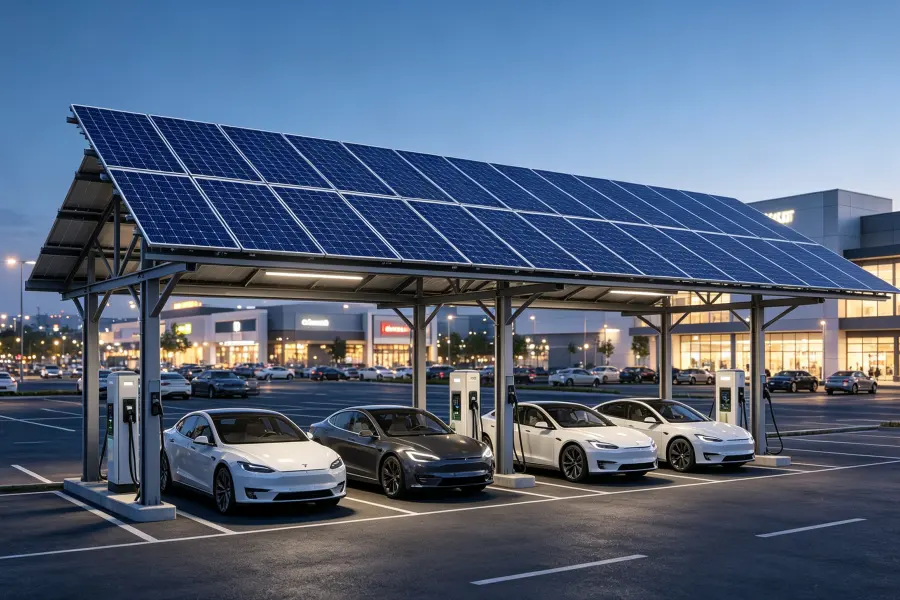
Workplace Solar Carport
- 20-50 kWp Solar PV
- 7-22 kW AC Chargers
- 10-30 Parking Spaces
- Grid-connected operation
- Optional BESS
Employees park for several hours, making AC charging an efficient and cost-effective option.
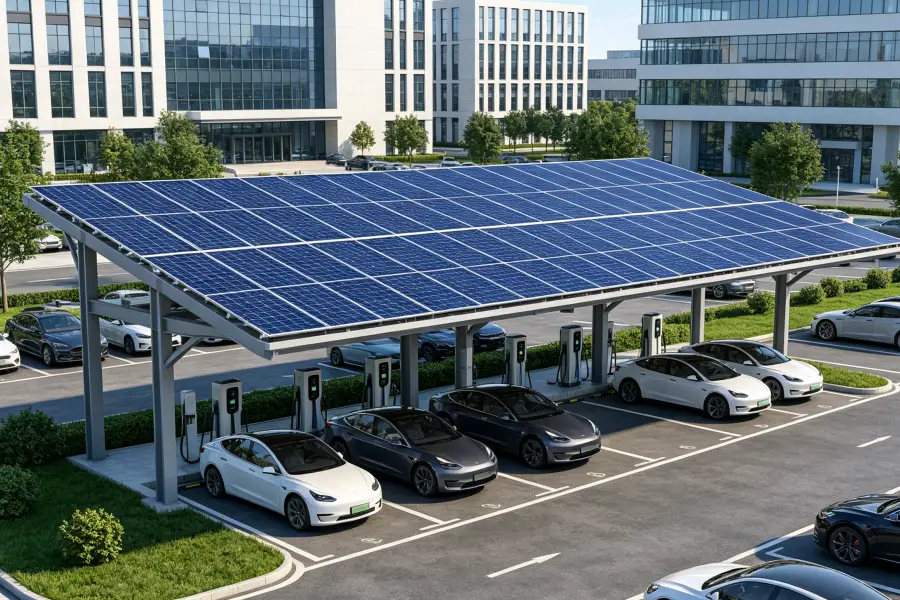
Commercial Solar Carport
- 50-200 kWp Solar PV
- 7-22 kW AC Chargers
- 60-120 kW DC Fast Chargers
- 20-60 Parking Spaces
- Optional BESS
A combination of AC and DC chargers provides flexible charging options for customers.
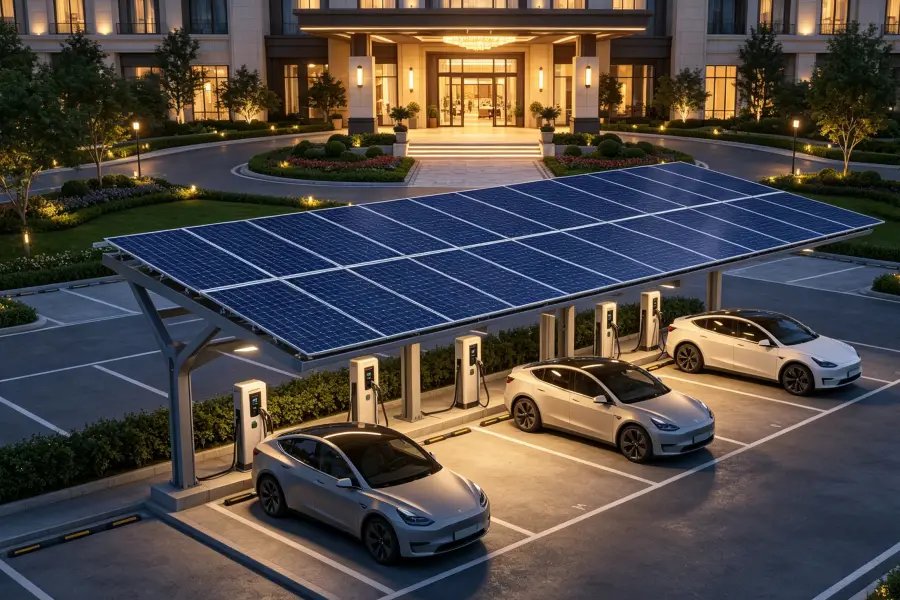
Fleet Solar Carport
- 100-500 kWp Solar PV
- 60-240 kW+ DC Charging
- Multiple AC Chargers
- 30-100+ Parking Spaces
- Optional BESS
Support daily charging for delivery vehicles, company fleets and electric vans.
Solar Carport Applications
EV Charging Options for Solar Carports
AC EV Charging
7-22 kW
- Workplace parking lots
- Hotels & Hospitality resorts
- Residential communities & Multi-family buildings
- Long-duration commercial parking spaces
- Public parking structures
Быстрая зарядка постоянным током
60-240 kW+
- Public commercial charging stations
- Fleet management operations
- Highway service zones & Retail hubs
- High-turnover parking environments
Key Components of a Solar Carport System
Why Choose a Solar Carport for EV Charging?
Customized Solar Carport Design for Commercial Projects
Every parking site has different solar potential, electrical capacity and charging requirements.
Solar Carport Engineering & Project Support
Optional Battery Storage for Solar Carports
For commercial solar carport projects with high charging demand or limited grid capacity, battery energy storage can be integrated to improve energy utilization and reduce peak demand.
Typical Solar Carport System Specifications
Why Choose Energy Splendor for Solar Carport Projects?
From Parking Space to Solar EV Charging Infrastructure
FAQ — Solar Carport EV Charging Solutions
A solar carport EV charging system combines a photovoltaic (PV) canopy, EV charging stations, electrical distribution equipment and optional battery energy storage (BESS) into an integrated charging infrastructure. Solar panels installed above parking spaces generate electricity that can be used to support AC or DC EV charging, while grid power can supplement the system when solar generation is insufficient.
Solar carport projects can be configured from approximately 20 kWp to 500 kWp+, depending on the available parking area, solar irradiation, structural design and charging demand. Larger commercial and fleet projects can also be engineered with higher PV capacities when sufficient roof or parking space is available.
Solar carport charging systems can integrate both AC and DC EV chargers. Typical configurations include 7–22 kW AC chargers for workplace, hotel and long-duration parking, and 60–360 kW+ DC fast chargers for commercial, public and fleet charging applications. The charger mix can be customized according to vehicle dwell time and daily charging demand.
Yes. A grid-connected solar carport can use electricity from the utility grid when PV generation is insufficient, allowing EV charging to continue during cloudy weather, at night or during periods of high charging demand. An optional BESS can further improve energy availability and solar utilization.
Да. BESS is an optional component for projects that require peak-demand management, energy shifting or higher solar self-consumption. Battery storage can store excess solar generation and discharge energy during high-demand periods to support EV charging and reduce grid peak demand.
The number of charging points depends on the available parking spaces, PV capacity, grid connection and charging requirements. Typical projects on this page range from approximately 10 to 100+ parking spaces. A system can combine multiple AC chargers with high-power DC fast chargers for different vehicle and user requirements.
Yes. A hybrid configuration can combine 7–22 kW AC charging с 60–360 kW+ DC fast charging. AC chargers are suitable for vehicles parked for several hours, while DC chargers are better suited to high-turnover commercial parking, fleet operations and locations requiring shorter charging times.
A customized design typically considers parking layout, available canopy area, solar irradiation, shading, PV capacity, EV charging demand, parking duration, existing grid capacity, transformer capacity, electrical protection and local structural requirements. These factors determine the appropriate PV, charger, BESS and electrical configuration for the project.
Depending on the target market and vehicle requirements, the system can be configured with Type 2, CCS2, CCS1, NACS or GB/T connectors. Commercial EV chargers can also support OCPP 1.6 or OCPP 2.0.1 for connection with compatible charging management platforms and backend systems.
Yes. Energy Splendor can support commercial solar carport projects with EV chargers, solar PV equipment, BESS and related electrical infrastructure, together with system configuration, technical documentation, equipment supply, installation support and commissioning assistance. Solutions can be customized for EPC contractors, project developers, distributors, fleet operators and commercial charging businesses.
For EPC & Commercial Projects
Let’s Design Your Solar Carport EV Charging Solution
Planning a commercial, fleet or public EV charging project? Share your project requirements with us, including parking spaces, PV capacity, charger power, BESS requirements and grid conditions.
Our team will evaluate your requirements and provide a customized system configuration, equipment selection and project quotation.
Последние новости
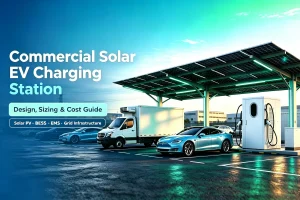
Commercial Solar EV Charging Station with BESS: Design, Sizing & Cost Guide
As electric vehicle adoption continues to grow, businesses and fleet operators are facing a new [...]
Aug
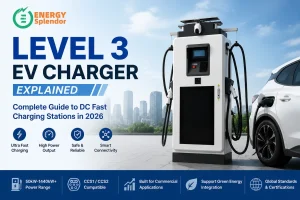
Обзор зарядных устройств для электромобилей уровня 3: полное руководство по станциям быстрой зарядки постоянным током в 2026 году
По мере того как во всем мире продолжается активное внедрение электромобилей, зарядная инфраструктура стала одним из ключевых компонентов [...]
Aug
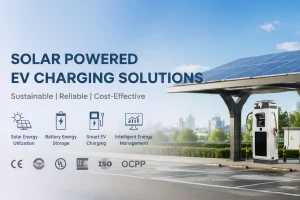
Зарядное устройство для электромобилей на солнечной энергии: полное руководство по солнечным зарядным станциям для электромобилей с аккумуляторными батареями
Зарядное устройство для электромобилей на солнечной энергии: создание инфраструктуры зарядки электромобилей на основе возобновляемых источников энергии Будущее [...]
Jul
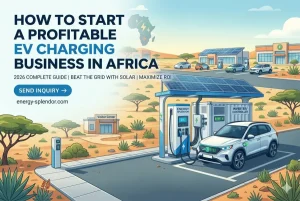
Как открыть прибыльный бизнес по зарядке электромобилей в Африке (полное руководство на 2026 год)
Как открыть прибыльный бизнес по зарядке электромобилей в Африке (полное руководство на 2026 год) Подзаголовок: Узнайте [...]
May