

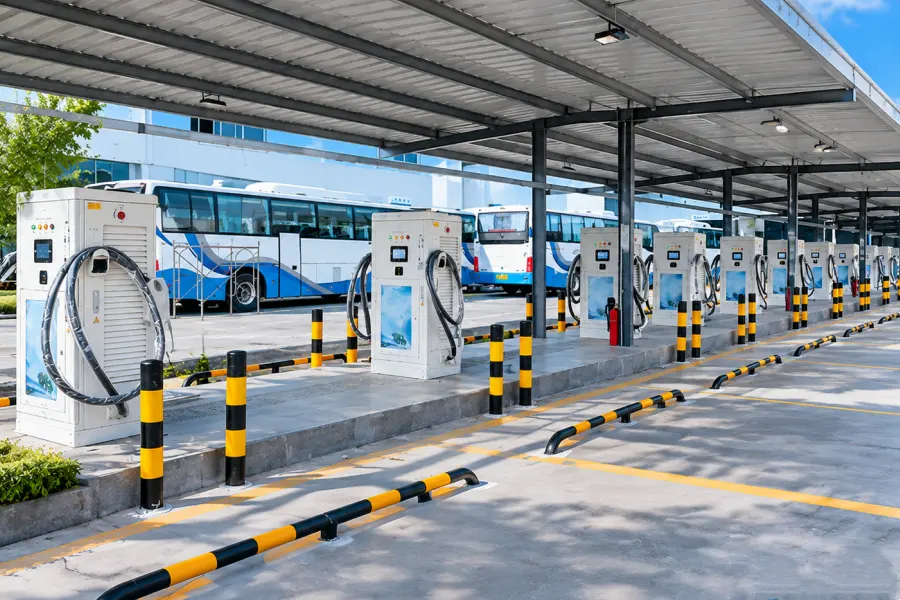
The global demand for electric vehicle (EV) charging infrastructure is creating new opportunities for importers, distributors, charging network operators and energy solution providers. As the EV market expands, more businesses are looking to China for commercial EV chargers, Estações de carregamento rápido em corrente contínua and customized charging solutions.
China has become an important manufacturing base for EV charging equipment, offering a wide range of products, competitive manufacturing capabilities and OEM/ODM services. However, choosing the right supplier is not simply about finding the lowest price.
A reliable EV charger manufacturer should provide more than hardware. Product quality, factory capabilities, international certifications, technical compatibility, customization, delivery reliability and after-sales support all play important roles in a successful purchasing decision.
So, how can importers identify a trustworthy EV charger manufacturer in China?
This guide covers 10 essential factors that international buyers should check before placing an order.
Quick Answer: What Should You Check Before Choosing an EV Charger Manufacturer in China?
Before selecting a Chinese EV charger manufacturer, evaluate these 10 factors:
Actual factory and manufacturing capabilities.
Product range and technical specifications.
International certifications and compliance documents.
Product quality control and testing procedures.
Charging connectors and market compatibility.
OCPP communication and software integration.
OEM/ODM customization capabilities.
Pricing transparency and total purchasing costs.
Production capacity and delivery reliability.
Warranty, spare parts and after-sales support.
A supplier that can demonstrate these capabilities with verifiable documentation, product samples and clear communication is better positioned to support long-term business cooperation.
1. Verify Whether the Supplier Is a Real EV Charger Manufacturer
The first step is to determine whether you are dealing with an actual manufacturer, a trading company or a distributor.
This distinction matters because manufacturers and trading companies may have different levels of control over production, customization, quality management and technical support.
A genuine EV charger factory should be able to explain its manufacturing process and demonstrate how its products are assembled, inspected and tested.
What should importers check?
Factory address and company registration information.
Manufacturing workshops and assembly facilities.
Production equipment and testing instruments.
Quality management procedures.
Research and development capabilities.
Production records and product traceability.
Experience supplying international customers.
If possible, arrange a factory visit or a live video inspection.
Ask the supplier to show the assembly line, testing area, finished products and packaging process rather than relying entirely on promotional photographs.
Practical tip: Ask whether the company manufactures the complete charging station or only assembles equipment using externally sourced components. This helps you understand its actual manufacturing capabilities and control over product quality.
2. Check the Product Range and Technical Capabilities
A professional EV charger manufacturer should offer products suitable for different charging applications rather than focusing on only one product category.
For importers and distributors, a broad product portfolio can make it easier to serve different customer groups and develop long-term business opportunities.
Common EV charger categories
| CATEGORIA DE PRODUTOS | TYPICAL POWER RANGE | COMMON APPLICATIONS |
|---|---|---|
| Portable EV Chargers | 3.5–22 kW | Residential and mobile charging |
| AC Wall-Mounted Chargers | 7–22 kW | Homes, hotels and workplaces |
| Commercial AC Chargers | 11–22 kW | Parking facilities and commercial buildings |
| Carregadores rápidos de corrente contínua | 30–60 kW | Commercial parking and smaller charging sites |
| High-Power DC Chargers | 120–240 kW | Public charging stations and fleets |
| Ultra-Fast DC Chargers | 300–360 kW and above | Highway charging and high-demand locations |
These are indicative product categories and power ranges, not a universal industry classification.
When evaluating a manufacturer, ask for detailed technical datasheets covering:
Rated output power and voltage range.
Maximum output current.
AC input voltage and frequency.
Charging connector options.
Number of charging connectors and power distribution.
Operating temperature range.
IP protection rating.
Communication interfaces.
Dimensions, weight and installation requirements.
For commercial projects, also check whether the manufacturer can provide different power configurations and explain the relationship between charging power, vehicle compatibility and available grid capacity.
A manufacturer capable of supplying portable chargers, AC wall-mounted units and commercial DC fast charging stations may also offer more flexibility for distributors building a diversified product portfolio.
3. Verify International Certifications and Compliance Documents
Certifications are among the most important factors when purchasing EV charging equipment for overseas markets.
However, importers should not simply ask whether a supplier has CE or other certificates. They should verify whether the documents apply to the exact product models being purchased.
Common certifications and standards to review
| CERTIFICATION / STANDARD | WHAT IT RELATES TO |
|---|---|
| CE Marking | Applicable EU product conformity requirements |
| RoHS | Restrictions on certain hazardous substances in electrical and electronic equipment |
| FCC | Applicable US electromagnetic compatibility requirements |
| IEC 61851 | Electric vehicle conductive charging systems |
| IEC 62196 | EV plugs, connectors and vehicle inlets |
| ISO 9001 | Quality management system certification |
The exact requirements depend on the product design, destination country and applicable regulations.
For European buyers, CE marking deserves particular attention.
A manufacturer must identify the applicable EU legislation, complete the required conformity assessment, prepare technical documentation, issue the EU Declaration of Conformity and affix the CE marking where required.
Importers should request:
EU Declaration of Conformity (DoC), where applicable.
Relevant test reports.
Applicable product certificates.
Product model and certificate identification.
Technical documentation supporting conformity.
Manufacturer and traceability information.
Do not assume that one CE document automatically covers every product in a supplier’s portfolio.
For more information, refer to the European Commission’s official CE Marking guidance.
Practical tip: Before paying a deposit, provide the intended product model and destination market to the supplier. Ask for the relevant compliance documents and confirm that the product configuration matches the documents.
Read More:Level 1 EV Charger in 2026: 120V Charging Speed, Cost, Installation & Buying Guide
4. Evaluate Product Quality Control and Testing Procedures
EV chargers are electrical products designed to operate in demanding environments. Poor manufacturing quality can lead to equipment failures, charging interruptions, maintenance expenses and reputational damage.
For commercial charging projects, reliability is especially important because a charger that remains unavailable can affect the operator’s business.
A professional manufacturer should have a documented quality control process covering incoming components, production, assembly and finished products.
Important quality control checkpoints
Incoming Material Inspection
Key electrical components, power modules, connectors, cables, circuit breakers and electronic components should be inspected before production.
Assembly Quality Control
Check wiring, electrical connections, mechanical assembly, component installation and production consistency.
Electrical and Functional Testing
Ask whether the factory performs relevant tests such as:
Insulation resistance testing.
Dielectric withstand testing, where applicable.
Grounding and protective circuit checks.
Charging function verification.
Communication and control testing.
Emergency stop function testing.
Temperature and operating condition checks, as applicable.
Final Inspection Before Shipment
The finished charger should be inspected for appearance, configuration, labeling, accessories and basic operational performance.
For outdoor commercial DC fast chargers, also pay attention to enclosure protection, cooling systems, cable management and environmental suitability.
Ask the manufacturer to provide sample factory inspection records or a pre-shipment inspection report.
A supplier that can explain its testing procedures clearly is easier to evaluate than one that only claims its products are of high quality.
5. Confirm Charging Connector Compatibility and Target Market Requirements
Charging connector compatibility is one of the first technical issues that international importers should clarify.
Different markets and vehicle fleets may require different connector configurations.
For example:
| MARKET / APPLICATION | COMMON CONNECTOR CONSIDERATIONS |
|---|---|
| Europa | CCS2 for DC charging; Type 2 for AC charging |
| United Kingdom | CCS2 for DC charging; Type 2 for AC charging |
| North America | CCS1 and NACS, depending on the vehicle and project |
| Selected international markets | CCS2, CCS1 or other configurations according to local requirements |
The actual connector selection should always be confirmed against the local vehicle fleet, charging standards and project specifications.
For commercial DC fast charging stations, ask the manufacturer about:
CCS1 and CCS2 availability.
Connector cable length.
Maximum voltage and current ratings.
Connector cooling requirements, if applicable.
Single-connector or dual-connector configurations.
Power sharing between charging connectors.
Compatibility with the intended vehicle models.
Do not assume that a charger with the correct connector can automatically deliver the full rated power to every vehicle. Vehicle battery voltage, charging limits and charger power distribution all affect the actual charging performance.
For importers serving multiple countries, connector flexibility can be an important advantage when developing a regional product portfolio.
6. Check OCPP Compatibility and Software Integration
For commercial charging networks, hardware specifications are only part of the purchasing decision.
Communication between charging stations and charging management software is equally important.
OCPP (Open Charge Point Protocol) is an open communication protocol developed by the Open Charge Alliance (OCA). It enables communication between charging stations and charging station management systems (CSMS).
Common versions include:
OCPP 1.6J
OCPP 1.6J is widely used in existing charging networks and supports functions such as charging transactions, remote monitoring, configuration and smart charging.
OCPP 2.0.1
OCPP 2.0.1 introduces an expanded device model, improved security features, enhanced transaction handling and additional smart charging capabilities.
It also supports advanced features related to ISO 15118.
Importantly, OCPP 1.6 and OCPP 2.0.1 are not backward compatible. Buyers should confirm the required protocol version with their software provider before purchasing.
Questions to ask the manufacturer
Does the charger support OCPP 1.6J or OCPP 2.0.1?
Has the implementation been tested with the intended CSMS?
Can the manufacturer provide integration documentation?
Are remote monitoring and firmware updates supported?
Does the system support RFID authorization?
Is mobile App operation available?
Can the charger support load management and remote configuration?
If OCPP certification is required by your project, ask for the exact certificate and verify the certified product and implementation.
Protocol support and formal OCPP certification are not the same thing.
Refer to the Open Charge Alliance for official protocol and certification information.
7. Evaluate OEM and ODM Customization Capabilities
For distributors, wholesalers and companies developing their own EV charging brands, OEM and ODM capabilities can be important when selecting a long-term supplier.
A manufacturer offering customization services can help buyers develop products that match their brand identity and local market requirements.
Common OEM/ODM customization options
| CUSTOMIZATION AREA | POSSIBLE REQUIREMENTS |
|---|---|
| Branding | Logo, brand name and product labels |
| Appearance | Enclosure color and design options |
| User Interface | Display language and interface configuration |
| Conectores | CCS1, CCS2, Type 2 and other compatible options |
| Software | Communication settings and selected functions |
| Payment | RFID, App and compatible payment solutions |
| Packaging | Customized cartons and product documentation |
| Technical Configuration | Selected power ratings and electrical specifications |
Before placing an OEM order, clarify:
Minimum order quantity (MOQ).
Customization costs.
Sample approval procedures.
Design and development lead time.
Intellectual property arrangements.
Packaging and labeling requirements.
Production consistency between samples and mass production.
A reliable OEM EV charger manufacturer should be able to explain which customizations are available for standard products and which require additional engineering or development.
8. Compare Pricing Transparently, Not Just the Unit Price
Price is important, especially for wholesale orders and large commercial charging projects.
However, the cheapest quotation does not necessarily represent the lowest total purchasing cost.
Two DC fast chargers with the same rated output power may differ in power modules, cooling systems, enclosure materials, electrical components, software functions and included accessories.
These differences can affect product performance, maintenance requirements and operating costs.
What should an EV charger quotation include?
Request a detailed quotation covering:
Product model and rated power.
Input and output electrical specifications.
Charging connector configuration.
Communication protocol and software functions.
Included cables and accessories.
Certification and documentation scope.
Warranty terms.
MOQ and volume pricing.
Production lead time.
Packaging and shipping terms.
For larger projects, also clarify whether installation support, commissioning, software integration and spare parts are included or quoted separately.
Understanding the total cost of ownership
For commercial charging infrastructure, the purchase price is only one part of the investment.
Other costs may include:
International transportation and insurance.
Import duties and taxes.
Customs clearance.
Installation and electrical works.
Transformer and switchgear upgrades.
Grid connection expenses.
Software and network service fees.
Maintenance and replacement components.
A transparent manufacturer should help you understand what is included in the equipment price and what needs to be arranged separately.
When comparing suppliers, make sure you are comparing equivalent product configurations rather than simply comparing quoted prices.
9. Confirm Production Capacity and Delivery Reliability
For distributors and project developers, delivery reliability can be just as important as product quality.
A supplier may offer an attractive price but still create problems if production schedules are unclear or delivery commitments cannot be met.
Before placing an order, ask about:
Current production capacity.
Standard product lead times.
OEM customization lead times.
Component availability.
Production scheduling procedures.
Pre-shipment inspection arrangements.
Export packaging and shipping experience.
For large commercial projects, it is also useful to discuss phased deliveries.
For example, a charging network operator may need an initial batch of chargers for a pilot site, followed by additional units after successful commissioning.
A manufacturer should be able to clarify whether it can support the planned delivery schedule and maintain consistent product configurations across different batches.
Check packaging and export experience
EV charging stations may contain sensitive electronic components and heavy electrical assemblies.
Ask the supplier about:
Export-grade packaging.
Moisture protection.
Shock protection.
Pallet or wooden case options.
Product labeling.
Shipping documentation.
Spare parts included in the shipment.
Clear shipping arrangements can help reduce transportation risks and avoid unnecessary delays during customs clearance.
10. Review Warranty, Spare Parts and After-Sales Support
A successful purchasing relationship does not end when the goods leave the factory.
For importers and distributors, after-sales support is an important part of the overall supplier evaluation.
Commercial charging stations may operate for many hours every day, so access to technical assistance and replacement components is essential.
Before purchasing, clarify the following:
Warranty Policy
Ask about the standard warranty period, warranty coverage, exclusions and the process for handling defective components.
Spare Parts Availability
Check whether the supplier can provide replacement power modules, charging connectors, cables, displays, control boards, cooling components and other relevant parts.
Technical Support
Confirm whether the manufacturer offers remote troubleshooting, wiring diagrams, installation documentation and technical assistance.
Firmware and Software Support
For network-connected charging stations, ask how firmware updates, configuration changes and software-related issues are handled.
Response Procedures
Clarify how technical problems are reported, what information needs to be provided and how replacement parts are arranged.
For distributors, it may also be useful to establish a spare parts package and technical training arrangement before launching the products in a new market.
A manufacturer that can support its equipment after delivery can help reduce the operational risks of long-term cooperation.
Comparison Checklist: How to Evaluate EV Charger Manufacturers
Before making a final purchasing decision, use the following checklist to compare potential suppliers.
| EVALUATION FACTOR | WHAT TO VERIFY |
|---|---|
| Factory Capabilities | Real manufacturing facilities and production processes |
| Gama de produtos | AC chargers, DC fast chargers and required power ratings |
| Certificações | Model-specific compliance documents and test reports |
| Quality Control | Incoming inspection, assembly checks and final testing |
| Conectores | CCS1, CCS2, Type 2 or project-specific requirements |
| Comunicação | OCPP version and CSMS integration compatibility |
| Personalização | OEM/ODM services and MOQ |
| Pricing | Detailed quotation and included accessories |
| Delivery | Production schedule and export experience |
| After-Sales | Warranty, spare parts and technical support |
Do not make a decision based on a single factor. A supplier should be evaluated according to your target market, project requirements and long-term business objectives.
Why Work with Energy Splendor?
Energy Splendor focuses on EV charging equipment manufacturing and commercial charging solutions for international markets.
Our product portfolio covers portable EV chargers, AC wall-mounted charging stations and commercial DC fast charging equipment, with power options across a range of applications from 3.5kW to 900kW.
We work with international buyers, distributors and project developers looking for charging equipment and customized supply solutions.
Our Product and Service Capabilities
1. Comprehensive EV Charging Product Portfolio
We provide portable chargers, AC charging stations and commercial DC fast chargers for residential, commercial, fleet and public charging applications.
2. Commercial DC Fast Charging Solutions
Our product portfolio includes high-power DC charging options for charging stations, fleet depots, commercial parking facilities and public charging networks.
3. OEM and ODM Customization
We support product customization and branding requirements for distributors, wholesalers and international business partners.
4. International Market Requirements
Our products and documentation support international market requirements, with CE, FCC and RoHS-related compliance documentation available for applicable product models. Specific certificates and declarations should be confirmed according to the selected model and destination market.
5. Integrated Energy Solutions
Beyond standalone EV chargers, we also work with integrated charging concepts combining solar PV, battery energy storage systems (BESS), energy management and EV charging infrastructure.
Our goal is to support customers with suitable charging products and practical solutions for different project requirements.
Explore our products and solutions at Esplendor Energético.
Frequently Asked Questions (FAQ)
1. How do I find a reliable EV charger manufacturer in China?
Start by checking the supplier’s factory capabilities, product specifications, certifications, quality control procedures and export experience. Request technical datasheets, relevant test reports, factory inspection evidence and product samples before placing a large order.
2. What is the difference between an EV charger manufacturer and a trading company?
A manufacturer generally has direct involvement in product engineering, production, assembly or manufacturing management. A trading company primarily coordinates product sourcing and sales. Both may be able to supply products, but buyers should understand who controls production, quality inspection, customization and technical support.
3. What certifications should I check when importing EV chargers into Europe?
Check the applicable EU product legislation and conformity requirements for the exact charger model. Depending on the product, relevant requirements may involve electrical safety, electromagnetic compatibility and restrictions on hazardous substances. Request the EU Declaration of Conformity, applicable test reports and supporting technical documentation. CE marking is a manufacturer’s conformity responsibility, not simply a generic certificate.
4. Can Chinese EV charger manufacturers provide OEM and ODM services?
Yes. Many manufacturers offer OEM and ODM services, including logo customization, enclosure design, packaging, interface configuration and selected technical modifications. However, available options, MOQ, development costs and lead times vary by manufacturer and product model.
5. What is the minimum order quantity for EV chargers?
MOQ depends on the product category, configuration and customization requirements. Standard chargers may be available in smaller quantities, while customized products and private-label orders may require higher minimum quantities. Buyers should request an MOQ quotation for their selected models.
6. Which DC fast charger power rating should I choose?
The right power rating depends on vehicle charging capability, expected daily traffic, parking duration, available grid capacity and project investment. Commercial charging applications may use 60kW, 120kW, 180kW, 240kW or 360kW DC chargers. A project assessment should be completed before selecting the final configuration.
7. Should I choose OCPP 1.6J or OCPP 2.0.1?
The decision depends on your charging management software and project requirements. OCPP 1.6J is widely implemented, while OCPP 2.0.1 provides additional capabilities, including enhanced security and device management. Confirm compatibility with your CSMS provider before purchasing.
8. Can I purchase EV chargers directly from a Chinese factory?
Yes. International importers, distributors, wholesalers and project developers can purchase directly from Chinese manufacturers. Before ordering, confirm the supplier’s legal identity, product configuration, technical documentation, payment terms, delivery schedule and warranty policy.
9. What information should I provide when requesting an EV charger quotation?
To receive an accurate quotation, provide the required power rating, charger type, connector standard, quantity, destination country, communication requirements and any customization preferences. For commercial projects, also provide the intended application and available electrical supply information.
10. Why should distributors work directly with an EV charger manufacturer?
Direct cooperation can improve communication about product specifications, customization, production scheduling, pricing and technical support. It may also make it easier to coordinate repeat orders and develop a consistent product portfolio for a local market.
Final Thoughts: Choose a Manufacturing Partner, Not Just a Supplier
Choosing an EV charger manufacturer in China is a business decision that can influence product quality, customer satisfaction, project performance and long-term profitability.
Before placing an order, take time to verify the factory, compare technical specifications, review compliance documents, understand the pricing structure and evaluate the supplier’s after-sales capabilities.
For importers and distributors, a reliable manufacturing partner should be able to provide consistent products, clear communication, customization options and ongoing technical support.
If you are looking for a Chinese EV charger manufacturer for wholesale purchasing, OEM/ODM cooperation or a commercial charging project, Energy Splendor welcomes your inquiry.
Get a Commercial EV Charging Project Quote
Tell us what you are looking for, and our team can help you identify suitable charging products for your market or project.
To receive a quotation, please provide:
Required charger type and power rating.
Connector standard (CCS1, CCS2 or Type 2).
Estimated order quantity.
Destination country.
OEM/ODM or customization requirements.
Contact Energy Splendor to discuss your EV charging requirements and explore potential manufacturing cooperation.