



















How to Start a Profitable EV Charging Business in Africa (2026 Complete Guide)
Subtitle: Discover how to beat power grid challenges with solar-integrated assets and tap into the multi-billion dollar African e-mobility market.
The African electric vehicle (EV) revolution is no longer a distant vision—it is compounding right now. Driven by skyrocketing fuel costs, government tax incentives, and a massive push for green energy, countries like South Africa, Kenya, Egypt, Morocco, and Ghana are witnessing an unprecedented boom in e-mobility. From electric delivery motorbikes (e-mobility fleets) in Nairobi to premium electric SUVs in Johannesburg, the vehicles are arriving fast.
However, there is one critical bottleneck: the severe shortage of reliable EV charging infrastructure.
For forward-thinking investors, commercial property developers, and petrol station owners, this infrastructural gap represents a golden, ground-floor business opportunity.
In this comprehensive 2026 guide, we will break down exactly how to start a profitable commercial EV charging business in Africa, solve the region’s unique power grid challenges, and maximize your return on investment (ROI).
💡 Quick Insight for B2B Investors:
Motorists and fleet operators switching from petrol to electricity in Africa are currently saving up to 60% on running costs. The demand for charging points is growing exponentially, while the supply remains critically low.
1. Market Analysis: Why Africa is Primed for EV Charging Investment
Many international observers underestimate the speed of Africa’s e-mobility transition. Local businesses, however, see the numbers. Fuel price volatility has made traditional internal combustion engine (ICE) vehicles financially draining for logistics companies and daily commuters alike.
Governments across the continent are aggressively clearing regulatory paths:
- East Africa: Kenya has implemented a special e-mobility electricity tariff, making it significantly cheaper to power commercial EV charging hubs.
- Southern Africa: South Africa is slashing import duties on electric vehicles and pushing for localized EV charging station infrastructure.
- North Africa: Egypt and Morocco are setting mandates to electrify public transport and local taxi fleets.
By investing in an EV charging station business today, you are securing premium, high-traffic “fueling” locations before the market becomes saturated.
2. The African Challenge: Overcoming Load-Shedding and Grid Instability
The number one question African investors ask is: “How can I run a reliable EV charging network when our local power grid faces frequent blackouts and load-shedding?”
The answer is simple: Solar-Integrated Microgrid Charging Assets.
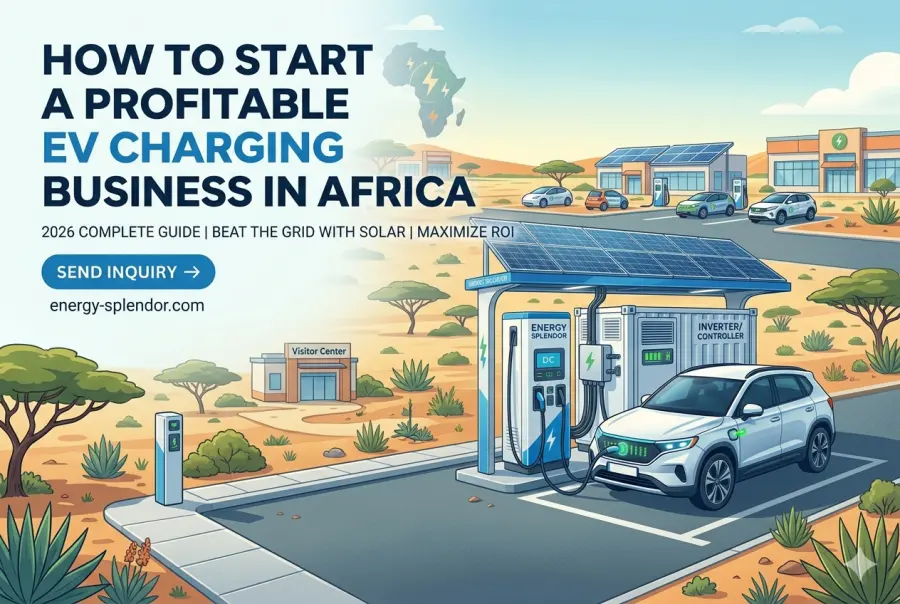
Africa possesses some of the highest solar irradiance levels in the world. By pairing commercial EV chargers with solar PV arrays and Battery Energy Storage Systems (BESS), you transform your charging station into an independent power plant.
Benefits of Solar Power EV Chargers:
- 24/7 Operational Uptime: Your DC fast chargers keep running and generating revenue even during total grid blackouts.
- Maximum Profit Margins: Utilizing free solar energy means you don’t pay peak-hour electricity tariffs to utility companies, dropping your operational costs to near zero.
- Minimal Grid Dependability: You can deploy profitable charging hubs along remote highways or safari lodges where grid infrastructure is weak or non-existent.
Read More:How to Choose the Right 60kW to 360kW DC Fast Charger for Your Commercial EV Charging Business
3. Top Business Models for Commercial EV Charging in Africa
How exactly does an EV charging infrastructure developer make money? There are three proven business models dominating the African market in 2026:
A. The Retail & Hospitality Destination Model
Targeting shopping malls, supermarkets, hotels, and restaurants. You install commercial AC EV chargers (7kW to 22kW). Drivers park and plug in while they shop or dine for 1 to 2 hours, boosting the core retail business’s sales through extended dwell time.
B. The Highway Fast-Charging Hub Model
Targeting inter-city highways, rest stops, and existing petrol stations. Utilize high-power commercial DC fast chargers (60kW to 180kW+) that can charge a vehicle to 80% in under 30 minutes. Drivers pay a premium per-kilowatt-hour (kWh) for speed.
C. The Fleet Electrification Partnership (B2B)
Targeting logistics hubs, ride-hailing depots, and corporate offices. Provide dedicated overnight or hub-based charging solutions for commercial electric fleets under long-term, predictable service contracts.
4. Choosing the Right Hardware: Engineered for African Conditions
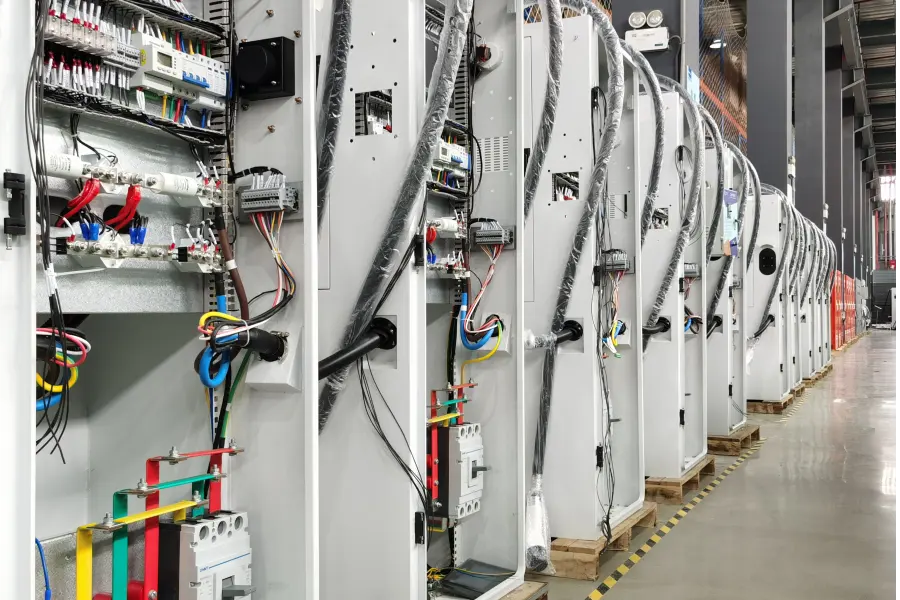
Africa’s environment demands rugged, industrial-grade hardware. Standard equipment will quickly fail due to extreme heat, heavy dust, and fluctuating electrical currents. When sourcing from an EV charging station factory, ensure your equipment meets these strict technical benchmarks:
| TECHNICAL FEATURE | WHY IT MATTERS FOR THE AFRICAN MARKET |
|---|---|
| IP54 / IP65 Weatherproof | Protects the internal electronics from heavy dust storms, insects, and tropical downpours. |
| Wide Operating Temp (-30°C to +55°C) | Prevents system overheating during peak African summer temperatures. |
| Smart Dynamic Load Balancing | Automatically distributes available power safely across multiple vehicles without overloading the transformer. |
| Mobile Money & OCPP Integration | Allows seamless payments via local platforms like M-Pesa, Orange Money, or credit cards via OCPP 1.6J/2.0.1. |
At Energy Splendor, we specialize in manufacturing high-durability, smart-grid compatible charging stations specifically engineered to withstand harsh environments and unstable grid conditions.
5. Calculating Your Commercial EV Charging Business ROI (The Math)
Is an EV charging network in Africa profitable? Let’s break down the mathematical model for a commercial charging setup using standard text presentation.
The basic formula for your Total Daily Revenue (Rday) is determined by the number of vehicles charged, the average energy delivered per vehicle, and the charging tariff applied:
Where:
- Nvehicles = Number of electric vehicles utilizing the charger per day.
- Eavg = Average energy delivered per vehicle in kilowatt-hours (kWh).
- Ptariff = Charging price charged to the consumer per kWh.
Let’s plug in conservative, real-world 2026 figures for a single dual-port 120kW DC Fast Charging Station located at a busy commercial site:
- Assume Nvehicles = 8 cars per day.
- Assume each vehicle takes a partial fast charge of Eavg = 30 kWh.
- Total daily energy throughput is calculated as: 8 × 30 = 240 kWh.
To find your Net Profit Margin, we calculate the difference between your retail tariff and your electricity sourcing cost (which drops significantly if you utilize integrated solar power assets):
If your retail tariff (Ptariff) is set to $0.40 / kWh and your sourcing/operational cost (Csource) is $0.15 / kWh, your net profit is $0.25 per kWh.
When combined with secondary revenue streams—such as convenience store sales, digital advertising screens on the chargers, or carbon credit monetization—investors typically achieve full capital expenditure (CAPEX) payback within 18 to 24 months.
Partner with Energy Splendor: Your Trusted EV Infrastructure Supplier
Navigating the e-mobility market requires a reliable manufacturing partner. Energy Splendor is a leading global EV charging station factory, delivering robust, high-performance AC and DC charging solutions tailored to the unique energy landscapes of developing markets.