



















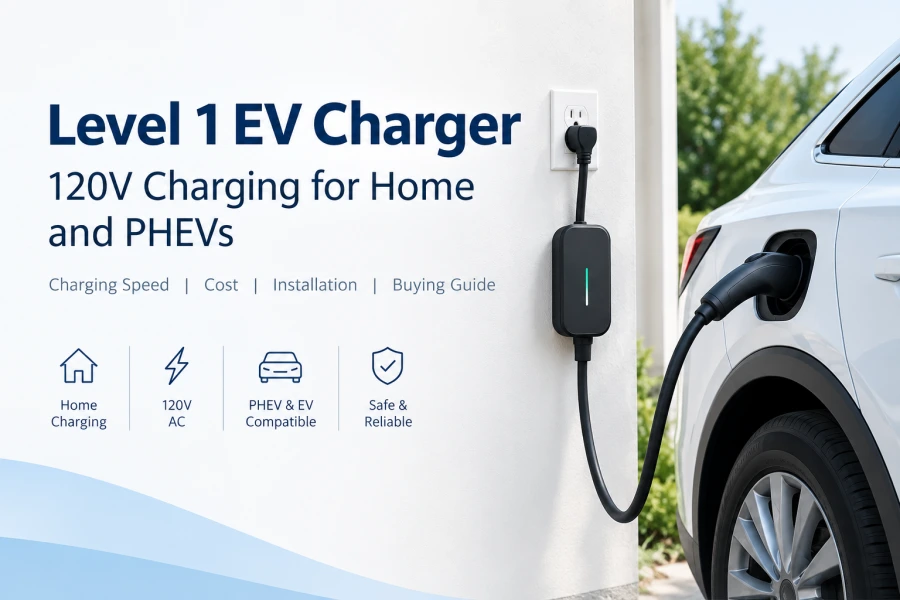
A Level 1 EV charger is the simplest way to charge an electric vehicle at home. Instead of requiring a dedicated high-power electrical circuit, Level 1 charging typically uses a standard 120V AC household outlet in the United States.
For drivers with short daily commutes, plug-in hybrid electric vehicles (PHEVs), or convenient overnight charging access, a Level 1 EV charger can be an affordable and practical charging solution. However, its relatively low charging power means that it may not be suitable for every EV owner.
This guide explains what a Level 1 EV charger is, how fast it charges, how much it costs, installation requirements, connector options, and when upgrading to Level 2 charging makes more sense.
What Is a Level 1 EV Charger?
A Level 1 EV charger is an AC electric vehicle charging system designed to operate from a standard household electrical outlet.
In North America, Level 1 charging generally uses:
- Voltage: 120V AC
- Aktuell: Typically 8–16A
- Charging power: Approximately 1–1.9 kW
- Connection: Standard household outlet
- Typical application: Laden zu Hause
- Installation: Usually simple compared with Level 2 charging
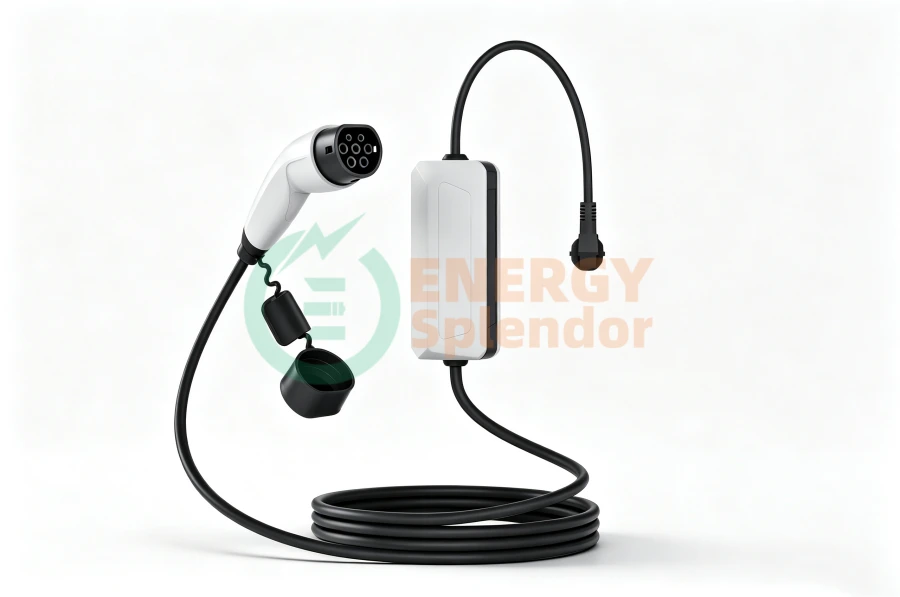
The term “Level 1 charger” is commonly used to describe the complete charging equipment supplied to the vehicle. Technically, the AC-to-DC conversion that charges the battery is performed by the vehicle’s onboard charger, while the EVSE controls and safely manages the electrical connection between the vehicle and the power source.
For everyday users, however, Level 1 EV charger, Level 1 charger, und 120V EV charger are often used interchangeably.
How Does a Level 1 EV Charger Work?
The basic charging process is straightforward:
120V AC outlet → Level 1 EVSE → Vehicle onboard charger → EV battery
The Level 1 EV charger supplies AC electricity to the vehicle. The vehicle’s onboard charger then converts the AC electricity into DC electricity that can be stored in the battery.
A Level 1 charging cable normally includes safety and control functions such as:
- Ground fault protection
- Overcurrent protection
- Temperature monitoring
- Charging status indication
- Plug and connector protection
- Communication with the vehicle
Because the system operates at relatively low power, Level 1 charging can generally be installed without the electrical upgrades commonly associated with higher-power charging equipment.
How Fast Does a Level 1 EV Charger Charge?
Charging speed is the biggest limitation of Level 1 charging.
A typical Level 1 EV charger delivers around 1 to 1.9 kW of power, depending on the available current and electrical configuration.
As a general reference, Level 1 charging can add approximately 2–5 miles of driving range per hour under typical conditions.
Actual charging speed depends on several factors:
- Vehicle battery capacity
- Vehicle onboard charger
- Battery state of charge
- Charging current
- Battery temperature
- Vehicle efficiency
- Charging losses
- Ambient temperature
For example, if an EV gains approximately 3 miles of range per hour, an overnight 10-hour charging session could theoretically add around 30 miles of range.
That can be sufficient for a driver who only travels a relatively short distance each day.
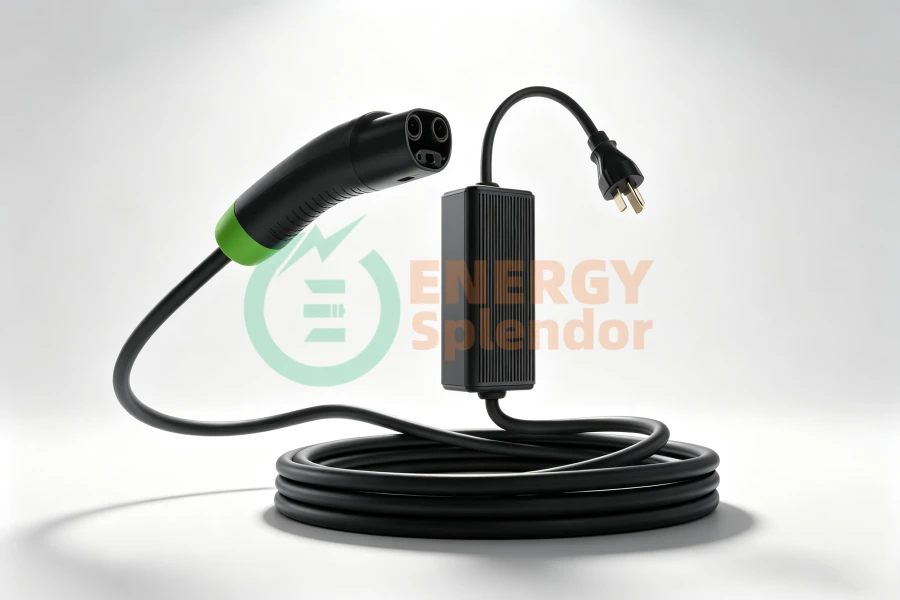
How Long Does It Take to Charge an EV With Level 1?
The answer depends heavily on the vehicle’s battery size and daily energy consumption.
For example, consider a simplified calculation for a vehicle with a 60 kWh battery.
If the charging system supplies approximately 1.4 kW of power:
60 kWh ÷ 1.4 kW ≈ 43 hours
This is a theoretical full-charge calculation. Real charging time can be longer because of charging losses and the way EVs reduce charging power as the battery approaches full capacity.
In practice, most EV owners do not need to recharge from 0% to 100% every night.
If a vehicle uses 15 kWh during a day’s driving, a Level 1 charger operating at approximately 1.4 kW could theoretically replace that energy in roughly:
15 kWh ÷ 1.4 kW ≈ 10.7 hours
This is why Level 1 charging can work well for drivers who park at home overnight and have relatively low daily mileage.
Level 1 EV Charger vs. Level 2 EV Charger
The biggest difference between Level 1 and Level 2 charging is electrical power.
| Funktion | Level 1 EV Charger | Level 2 EV Charger |
|---|---|---|
| Typical Voltage | 120V AC | 208–240 V Wechselstrom |
| Typical Power | About 1–1.9 kW | About 3–19.2 kW |
| Charging Speed | Slow | Much faster |
| Typical Location | Startseite | Home, workplace, commercial |
| Installation | Usually simple | May require dedicated circuit |
| Best For | PHEVs, short commutes | Daily EV charging |
| Electrical Upgrade | Often unnecessary | May be required |
A Level 1 charger is primarily a convenience and overnight charging solution.
A Level 2 EV charger is better when a driver needs to recover significantly more range during a normal overnight parking period.
Which Is Better: Level 1 or Level 2?
There is no universal answer.
Choose Level 1 when:
- You drive relatively few miles per day
- You park at home overnight
- Your vehicle is a PHEV
- You already have a suitable 120V outlet
- You want to minimize installation costs
- You do not need rapid charging
Consider Level 2 when:
- You drive long distances every day
- You own a battery-electric vehicle with a larger battery
- You need faster overnight charging
- Multiple drivers use the same charging location
- You want to recover substantial range within several hours
For many households with a dedicated garage or parking space, Level 2 provides significantly more flexibility. Level 1 remains useful where electrical capacity, installation cost, or daily driving requirements make higher-power charging unnecessary.
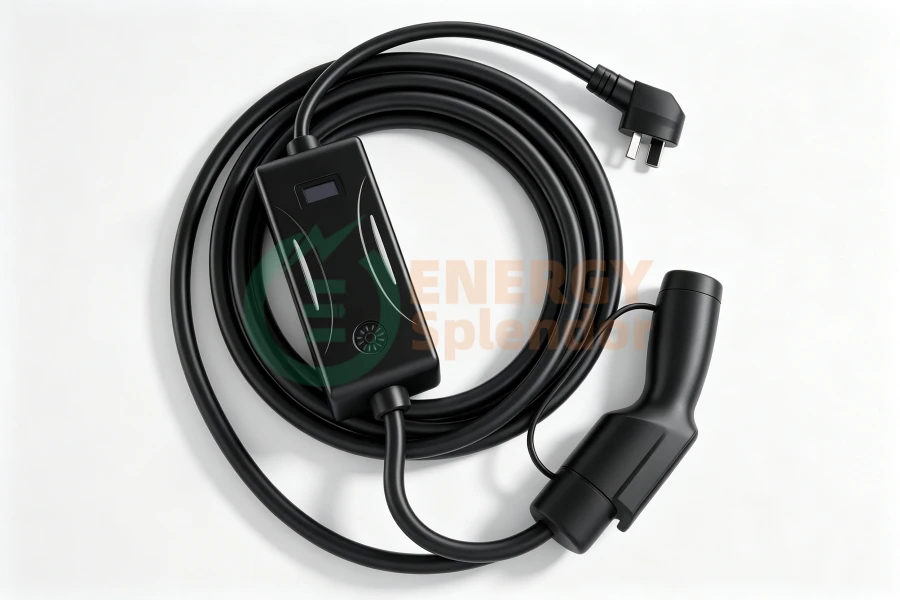
How Much Does a Level 1 EV Charger Cost?
The total cost of Level 1 EV charging consists of more than the charger itself.
Potential costs include:
- EV charger or EVSE
- Electrical outlet
- Electrical installation
- Circuit protection
- Wiring
- Mounting accessories
- Permit or inspection costs, where applicable
- Electricity consumption
The major advantage of Level 1 charging is that many users can take advantage of an existing household outlet.
If the existing outlet and electrical circuit are suitable, installation costs can be considerably lower than installing a dedicated Level 2 circuit.
However, the condition and rating of the electrical outlet should always be checked before continuous EV charging. An EV can draw power for many hours, so a loose, damaged, or improperly wired outlet can create a safety risk.
Does a Level 1 EV Charger Need a Dedicated Circuit?
Not necessarily, but the electrical circuit must be suitable for continuous EV charging.
A standard 120V outlet may be capable of supporting Level 1 charging, depending on the circuit configuration and charging current.
Users should consider:
- Outlet condition
- Circuit capacity
- Breaker rating
- Wiring condition
- Grounding
- Other loads on the circuit
- Local electrical codes
Avoid using unsuitable extension cords or overloaded outlets for EV charging.
If there is any uncertainty about the electrical installation, a qualified electrician should inspect the circuit before regular charging.
J1772 vs. NACS for Level 1 Charging
Connector compatibility is another important consideration when purchasing a Level 1 EV charger.
J1772
The SAE J1772 connector has historically been widely used for AC charging in North America.
It is commonly found on many EVs and PHEVs and supports Level 1 and Level 2 AC charging.
NACS
The North American Charging Standard (NACS), based on the Tesla connector design, is increasingly used by automakers in North America.
The correct connector depends on the vehicle.
When purchasing a Level 1 EV charger, always verify:
- Vehicle charging port
- Connector type
- Electrical rating
- Cable length
- Compatibility with the vehicle
Adapters may be available for some vehicle and connector combinations, but compatibility should be confirmed before purchase.
What Features Should You Look for in a Level 1 EV Charger?
The simplest Level 1 EV charger does not need many advanced functions. However, several features can improve convenience and safety.
1. Adjustable Charging Current
An adjustable current setting can help users manage the electrical load on a household circuit.
2. Ground Fault Protection
Ground fault protection is an important safety feature for EV charging equipment.
3. Over-Temperature Protection
Temperature monitoring can help prevent overheating at the plug, connector, or control unit.
4. Durable Enclosure
If the charger will be used in a garage, carport, or outdoor environment, the enclosure and connector should be appropriate for the intended conditions.
5. Long Charging Cable
A longer cable can make parking and vehicle connection easier, particularly when the outlet is not directly next to the vehicle.
6. Charging Status Display
LED indicators or a display can help users quickly identify charging status and fault conditions.
7. Smart Charging
Some modern Level 1 EV chargers provide connectivity through Wi-Fi, Bluetooth, or mobile applications.
Smart charging features can include:
- Scheduled charging
- Energy monitoring
- Charging history
- Remote control
- Dynamic charging management
These features are optional for many residential users but may become more valuable in managed charging environments.
Is Level 1 Charging Safe?
Level 1 charging is generally straightforward when the equipment and electrical installation are properly designed and used.
However, EV charging is a continuous electrical load, often lasting several hours.
Users should:
- Use a properly rated outlet
- Keep the plug and connector dry
- Inspect cables regularly
- Avoid damaged cables
- Avoid overloaded circuits
- Avoid unsuitable extension cords
- Follow the manufacturer’s instructions
- Stop charging if the outlet or plug becomes unusually hot
If an outlet shows signs of overheating, discoloration, burning smell, looseness, or damage, charging should be stopped and the electrical installation inspected.
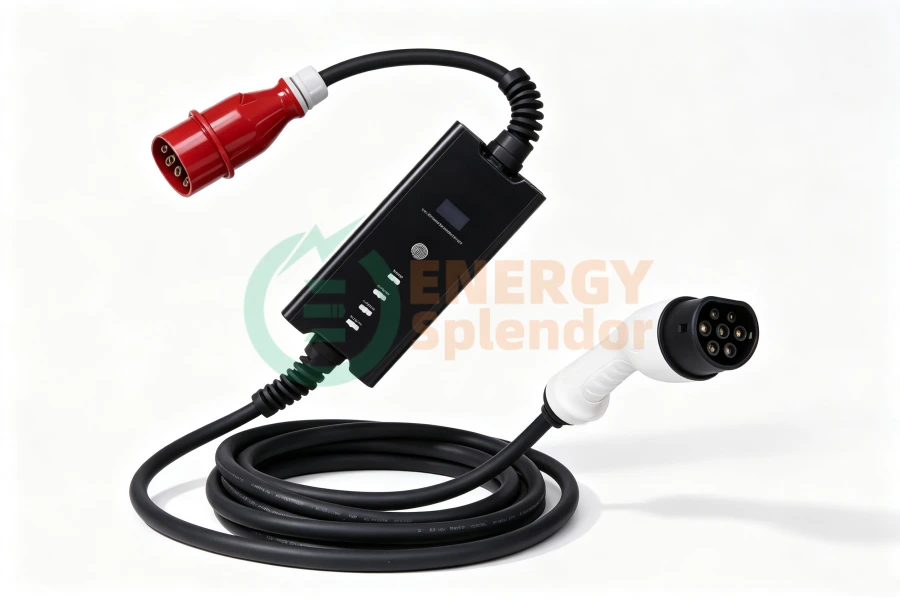
Can You Use a Level 1 EV Charger for a PHEV?
Yes. A Level 1 EV charger can be particularly suitable for plug-in hybrid electric vehicles (PHEVs).
Most PHEVs have smaller batteries than full battery-electric vehicles. Because of this, relatively low charging power can still be sufficient to recharge the battery overnight.
For example, a PHEV with a relatively small battery may recover most or all of its usable electric range during several hours of overnight Level 1 charging.
For PHEV owners with short daily trips, upgrading to Level 2 may therefore provide limited additional practical value.
Can Level 1 Charging Be Used Outdoors?
It can be, provided that the charging equipment is specifically designed and rated for outdoor use and the electrical connection is properly protected.
Before outdoor use, check:
- EVSE enclosure rating
- Connector protection
- Cable durability
- Weather resistance
- Outlet protection
- Ground fault protection
- Local electrical requirements
A Level 1 EV charger intended only for indoor use should not be installed outdoors.
Can Level 1 EV Charging Be Used for Commercial Fleets?
Level 1 charging can be useful in specific fleet scenarios, but it is generally not the preferred solution for high-utilization commercial fleets.
For example, Level 1 may be practical when:
- Vehicles remain parked overnight
- Daily mileage is low
- Vehicles have long dwell times
- Charging demand is predictable
- Vehicles are PHEVs
- Electrical infrastructure is limited
However, commercial fleets with high daily mileage generally need faster charging.
For delivery fleets, logistics vehicles, electric vans, taxis, and other high-utilization vehicles, Level 2 AC charging or DC fast charging is typically more appropriate.
When Should You Upgrade From Level 1 to Level 2?
A Level 1 EV charger may eventually become inconvenient as EV ownership and driving requirements increase.
Consider upgrading when:
- Your vehicle regularly needs more range than Level 1 can restore overnight
- Your daily mileage increases
- You have multiple EVs
- Charging time becomes inconvenient
- Your vehicle has a large battery
- You need predictable charging availability
- You want more advanced energy management
The decision should be based on daily energy consumption and parking time, rather than battery capacity alone.
For example, a driver who uses only 10–15 kWh per day and parks for 12 hours may find Level 1 adequate. Another driver using 40–50 kWh per day may benefit substantially from Level 2 charging.
Level 1 EV Charger Buying Checklist
Before purchasing a Level 1 EV charger, check the following:
Electrical
- 120V compatibility
- Maximum charging current
- Charging power
- Plug type
- Circuit capacity
Vehicle
- J1772 or NACS compatibility
- EV or PHEV compatibility
- Vehicle charging limits
Sicherheit
- Ground fault protection
- Overcurrent protection
- Over-temperature protection
- Appropriate enclosure rating
- Cable protection
Installation
- Outlet location
- Cable length
- Indoor or outdoor use
- Mounting requirements
- Local electrical requirements
Intelligente Funktionen
- Scheduled charging
- Energy monitoring
- Wi-Fi/Bluetooth
- Mobile app
- Remote management
Commercial Considerations
For fleet or business applications, also consider:
- Anzahl der Fahrzeuge
- Vehicle dwell time
- Daily energy consumption
- Number of charging points
- Available electrical capacity
- Load management
- OCPP compatibility, if required
- Future charging expansion
Is a Level 1 EV Charger Worth It in 2026?
For the right user, yes.
The biggest advantages of Level 1 charging are its simplicity, low installation requirements, and compatibility with standard 120V electrical infrastructure.
Its biggest disadvantage is charging speed.
A Level 1 charger can be an excellent choice for:
- PHEV owners
- Low-mileage EV drivers
- Overnight home charging
- Backup charging
- Renters
- Drivers with limited electrical capacity
It becomes less attractive when fast turnaround, high daily mileage, or multiple vehicles are involved.
The best EV charging solution is therefore not necessarily the charger with the highest power rating. It is the one that matches the vehicle, daily energy requirements, parking time, electrical infrastructure, and future charging needs.
Frequently Asked Questions About Level 1 EV Chargers
Is a Level 1 EV charger just a normal outlet?
No. A Level 1 EV charger normally includes EVSE equipment that manages the electrical connection and communicates with the vehicle. The household outlet provides the electrical supply.
Is Level 1 charging 120V?
In North America, Level 1 charging typically uses a 120V AC household electrical supply.
How many miles does Level 1 charging add per hour?
A typical Level 1 EV charger can add approximately 2–5 miles of range per hour, although actual results depend on the vehicle and charging conditions.
Can Level 1 fully charge an EV overnight?
It depends on the battery size and how much energy the vehicle needs. A PHEV or low-mileage EV may be adequately recharged overnight, while a larger EV battery may require substantially longer.
Is Level 2 faster than Level 1?
Yes. Level 2 operates at substantially higher power and can restore considerably more driving range during the same charging period.
Can I charge my EV from a regular 120V outlet?
A suitable 120V outlet can be used for Level 1 charging when the outlet, circuit, EVSE, and vehicle are compatible and the installation complies with applicable electrical requirements.
Does Level 1 charging use a lot of electricity?
The charging power is relatively low, but the vehicle may charge for many hours. Electricity consumption ultimately depends on how much energy the vehicle needs and the local electricity rate.
Final Takeaway
A Level 1 EV charger remains a practical entry-level charging solution in 2026, particularly for home users, PHEV owners, and EV drivers with modest daily mileage.
With typical 120V AC input and approximately 1–1.9 kW of charging power, Level 1 charging is significantly slower than Level 2 charging, but it can provide enough energy for many overnight charging scenarios without requiring major electrical upgrades.
Before choosing a charger, evaluate your vehicle, daily driving distance, parking time, electrical capacity, connector type, safety requirements, and future charging needs.
For higher-mileage EVs, multiple vehicles, commercial fleets, and applications requiring faster vehicle turnaround, a Level 2 AC charger or Gleichstrom-Schnellladung system may be a better long-term solution.
Need help selecting an EV charging solution for your project?
Contact Energy Splendor to discuss your charging requirements, electrical infrastructure, power level, connector configuration, and gewerbliche Ladestationen für Elektrofahrzeuge project needs.