


















WHY DO EV CHARGING PROJECTS NEED BESS?

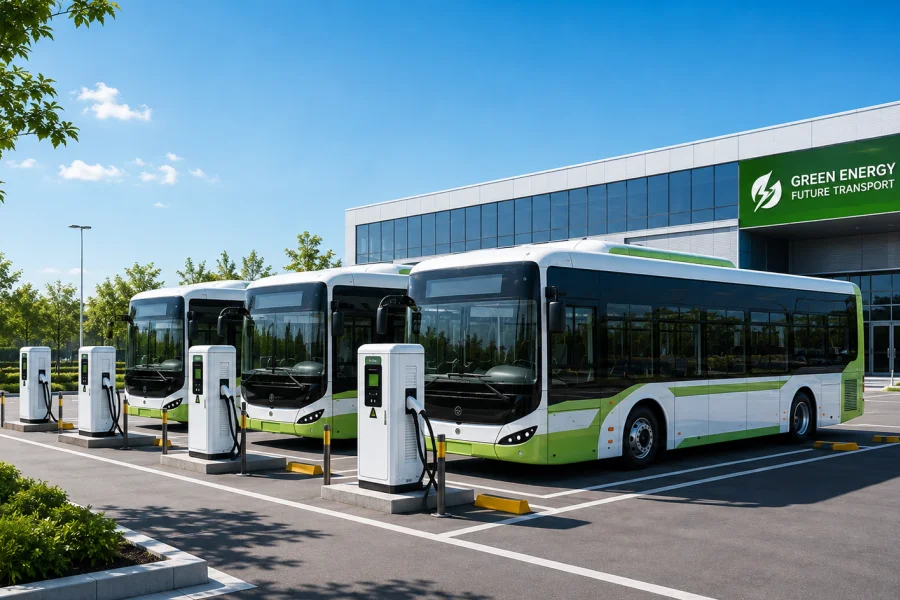
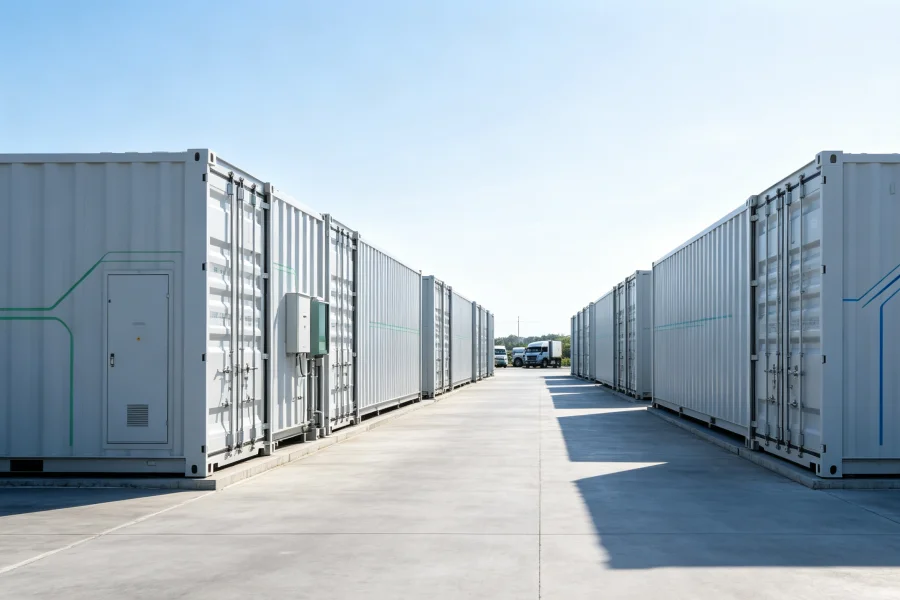
High-power EV charging can place significant demands on existing electrical infrastructure. A properly sized BESS works together with the grid and EV chargers to manage these power demands and create a more flexible charging infrastructure.

Limited Grid Capacity

Existing grid connections may not provide sufficient capacity for multiple high-power DC chargers operating simultaneously.

Peak Power Demand

Multiple EVs charging at the same time can create short-duration power peaks that increase the site’s maximum demand.

Costly Grid Upgrades

Increasing charging capacity may require transformer upgrades, switchgear modifications or additional grid infrastructure.

Variable Charging Loads

EV charging demand changes throughout the day, making intelligent power management essential for efficient operation.

 BESS + EV CHARGING SYSTEM   ARCHITECTURE

The EMS coordinates grid power, battery storage and EV charging demand in real time. BESS can charge when grid capacity is available and discharge during high-demand charging periods to support the charging load.
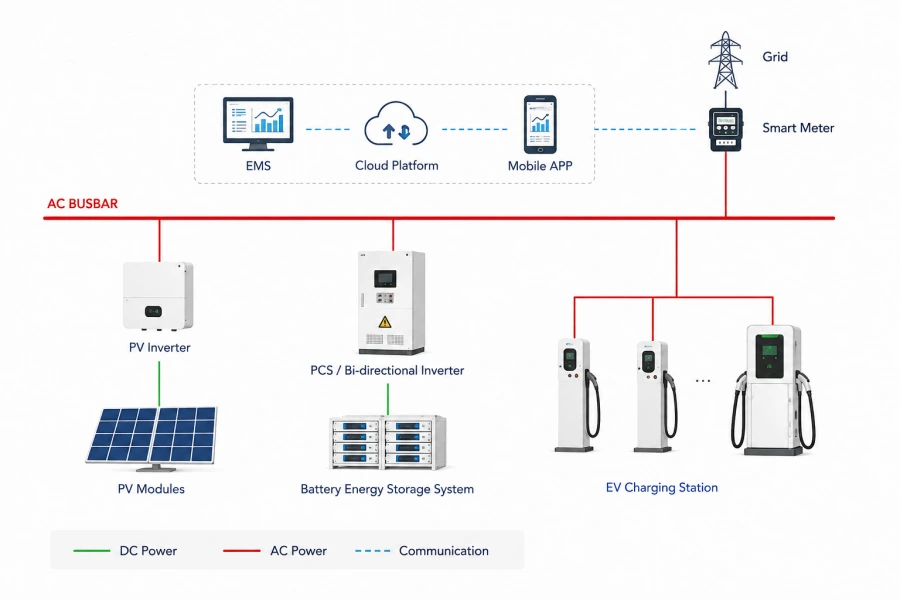
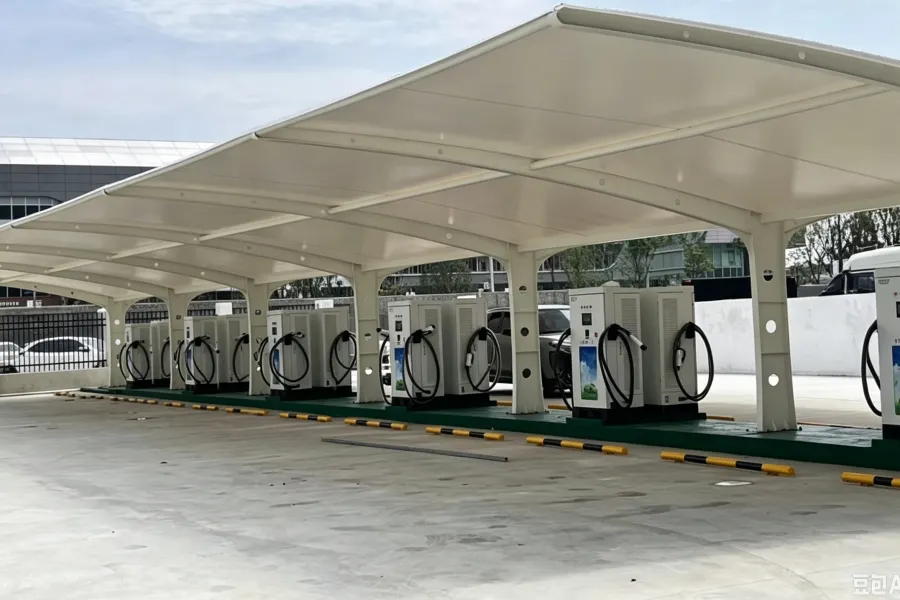
Integrated Solar PV, Battery Energy Storage and EV Charging System Architecture with EMS, PCS, BESS, EV Chargers and Grid Connection for Commercial Energy Management by Energy Splendor

HOW DOES BESS WORK WITH EV CHARGERS?

01

Grid Power Supply

The utility grid provides the primary power source for the EV charging infrastructure and connected site loads.

02

BESS Energy Storage

The BESS stores electrical energy through the PCS when grid conditions and energy strategy allow charging.

03

Peak Power Support

When EV charging demand reaches grid limits, the BESS discharges to supplement available grid power.

04

Intelligent Power Management

EMS continuously monitors demand, grid load, and battery status to dynamically manage power.


Smart Energy Synergy

By balancing supply and demand in real time, BESS reduces grid reliance, avoids costly peak tariffs, and guarantees uninterrupted fast charging.

KEY BENEFITS OF BESS INTEGRATED EV CHARGING

Peak Shaving

Reduce short-duration power peaks by supplying additional power from the battery during high-demand periods.

Grid Capacity Optimization

Make more effective use of existing electrical infrastructure and available grid capacity.

High-Power Charging

Support high-power DC charging deployments where grid capacity may limit charger output or expansion.

Load Management

Balance charging demand across multiple chargers according to available grid and battery power.

Demand Management

Help commercial operators control site peak demand and optimize energy usage effectively.

Scalable Infrastructure

Expand charging capacity seamlessly by combining chargers, BESS, and smart power management.


BESS + EV CHARGING SYSTEM CONFIGURATIONS

01

COMMERCIAL EV CHARGING SYSTEM

215 – 500 kWh BESS

Commercial EV Charging System

Office Buildings
الفنادق
Shopping Centers

Commercial Parking
Workplace Charging

BESS Capacity
215 – 500 kWh
الشحن بالتكييف
7 – 22 كيلوواط
DC Charging
60 – 180 kW
Charging Points
2 – 10
الشبكة
LV

02

FLEET EV CHARGING SYSTEM

500 kWh – 1.5 MWh BESS

Fleet EV Charging System

Logistics Fleets
Delivery Fleets
Bus Depots

Industrial Parks
Commercial Fleets

BESS Capacity
500 kWh – 1.5 MWh
EV Charging Power
120 – 480 kW
Charging Points
4 – 20+
الشبكة
LV / MV
EMS
متكامل

03

HIGH-POWER EV CHARGING HUB

1.5 – 5 MWh+ BESS

High Power EV Charging Hub

Highway Charging Hubs
Large Fleet Depots
Heavy-Duty EV Charging

شبكات الشحن العامة
High-Turnover Stations

BESS Capacity
1.5 – 5 MWh+
EV Charging Power
360 – 1440 kW+
Charging Points
10 – 40+
الشبكة
MV
EMS
Advanced


INTEGRATED BESS SYSTEM COMPONENTS

Battery System
High-density LFP battery systems designed for commercial and industrial applications.

PCS (Power Conversion System)
Bidirectional power conversion system for controlled battery charging and discharging.

EMS (Energy Management System)
Energy management platform for grid monitoring, peak shaving and charging optimization.

Power Distribution
Switchgear, protection devices and electrical distribution equipment for safe system integration.

Thermal Management
Integrated temperature monitoring and thermal management for reliable battery operation.

Fire Safety
Battery monitoring and dedicated safety protection systems for energy storage applications.

EV CHARGING SOLUTIONS COMPATIBLE WITH BESS

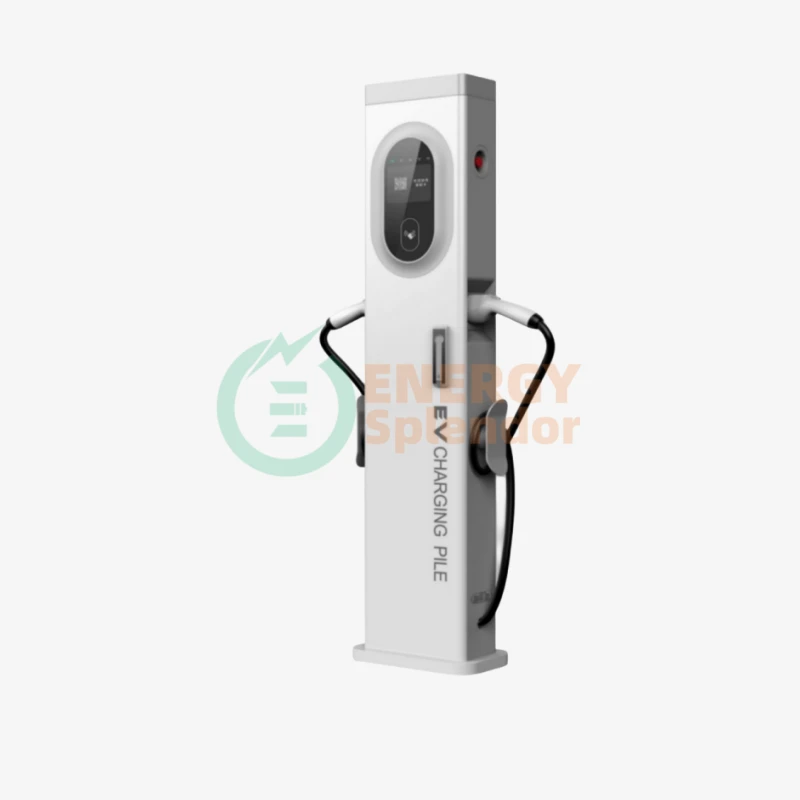
AC EV Charging
AC EV CHARGING
7 kW / 11 kW / 22 kW / 44 kW
Ideal for office, hotel, workplace and commercial parking.

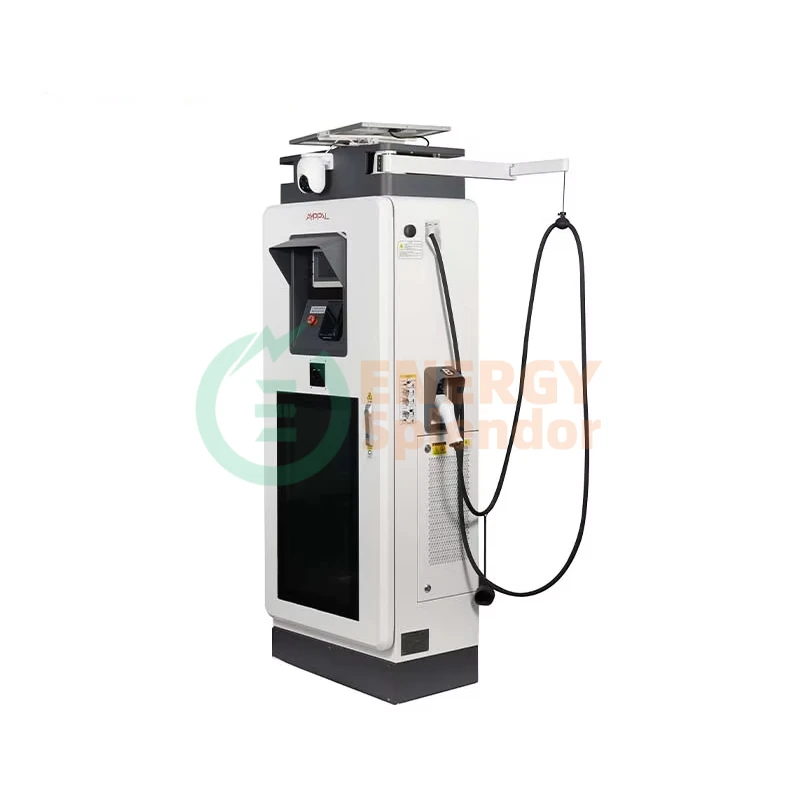
DC Fast Charging
DC FAST CHARGING
60 kW / 120 kW / 180 kW / 240 kW / 360 kW / 480 kW+
Ideal for public charging, fleet, commercial and highway.

Ultra-Fast Charging
ULTRA-FAST CHARGING
480 kW – 1440 kW+
Ideal for heavy-duty EV, electric trucks, large fleet depots and high-power charging hubs.

INTELLIGENT ENERGY MANAGEMENT (EMS)

MONITORING
Grid Power
Battery SOC
الطلب على الشحن
Charger Status
Battery Status
Site Load
Power Consumption

CONTROL
Peak Shaving
Load Balancing
Dynamic Power Allocation
Battery Charging
Battery Discharging
Charging Priority
Grid Power Limiting


EXAMPLE: SUPPORTING HIGH-POWER EV CHARGING WITH LIMITED GRID CAPACITY

Scenario
Available Grid Capacity: 500 kW
Installed EV Charging Capacity: 720 kW
EV Chargers: 4 × 180 kW

GRID
500 kW

🔋 BESS

EV CHARGERS
4 × 180 kW

▲ Power Support

🚗
EVs Loading

When charging demand exceeds the configured grid power limit, the BESS can discharge additional power to support the EV charging load, providing greater flexibility for high-power charging.

BESS + EV CHARGING APPLICATIONS

محطات الشحن العامة للسيارات الكهربائية
High-turnover charging locations requiring multiple DC fast chargers and managed grid demand.

شحن أسطول المركبات
Centralized charging infrastructure for logistics, delivery and commercial vehicle fleets.

Electric Bus Depots
Managed high-power charging for scheduled fleet operations and depot charging.

Heavy-Duty EV Charging
High-power charging infrastructure for electric trucks and commercial vehicles.

Highway Charging Hubs
Scalable charging hubs where available grid capacity may constrain high-power charging deployment.

Industrial & Business Parks
Integrated EV charging and energy storage for commercial and industrial facilities.

WHY ADD BESS TO EV CHARGING INFRASTRUCTURE?

FEATURECONVENTIONAL EV CHARGINGBESS + EV CHARGING
Grid DependenceمرتفعManaged +
Peak DemandUncontrolled / HighManaged +
Grid Capacity UtilizationمحدودOptimized +
High-Power ChargingGrid DependentMore Flexible +
Load ManagementأساسيIntelligent +
Energy Storageلانعم +
Power Flexibilityمحدودمرتفع +
Charging ExpansionGrid DependentMore Flexible +

By integrating BESS, operators lower demand charges, defer costly transformer upgrades, and ensure continuous high-power fast charging even during grid constraints.


TYPICAL SYSTEM SPECIFICATIONS

PARAMETERTYPICAL RANGE
BESS Capacity215 kWh – 5 MWh+
PCS Power100 kW – 1 MW+
EV Charging Power60 – 1440 kW+
الشحن بالتكييف7 – 44 kW
DC Charging60 – 480 kW+
Battery ChemistryLFP
Grid ConnectionLV / MV
EMSمتكامل
التواصلOCPP / Modbus / Ethernet
التطبيقاتCommercial / Fleet / Public / Industrial

FROM SITE ASSESSMENT TO BESS EV CHARGING DEPLOYMENT

01
Project Assessment
Site conditions, grid capacity and campus charging requirements.

02
Load Analysis
Analyze EV charging load and peak demand profile.

03
BESS Sizing
Determine battery capacity and PCS for the power BESS project.

04
EV Charger Config
Select AC/DC chargers and charging power requirements.

05
EMS Configuration
Configure power limits, load management and battery strategies.

06
System Deployment
Equipment supply, installation and commissioning.


FAQ-BESS-Powered EV Charging Solutions

A: Integrating a BESS provides three key strategic advantages:

  • Grid Buffer: Allows deployment of Ultra-Fast DC Chargers even in locations with limited local grid capacity.

  • Opex Reduction: Enables Peak Shaving و Time-of-Use (ToU) arbitrage, charging the batteries during off-peak hours and discharging during peak times to eliminate costly demand charges.

  • Resilience: Acts as an uninterruptible power supply (UPS) or microgrid asset, ensuring continuous charger operation during grid outages.

A: Our solution is fully compatible with both AC chargers (7 kW – 44 kW) for long-dwell parking and DC Fast/Ultra-Fast Chargers (60 kW – 480 kW+) for rapid turnaround. We offer tailored hybrid configurations for commercial real estate, fleet depots, and highway service plazas.


A: We utilize high-safety Tier-1 Lithium Iron Phosphate (LFP) chemistry with a cycle life exceeding 6,000+ cycles. Safety is built-in with a 3-tier Battery Management System (BMS), active liquid-cooling temperature control, and multi-stage fire suppression systems (Aerosol/FK-5-1-12) fully compliant with UL9540A and NFPA 855 standards.

A: Absolutely. That is the core capability of our solution. BESS acts as a power booster. For instance, if your site only has a 100 kW grid connection, the BESS can seamlessly supplement the grid to deliver 360 kW+ output to vehicles during peak charging sessions without overloading upstream transformers.

A: The EMS is the central intelligence of the asset. It dynamically balances power flows between the grid, BESS, renewable generation (e.g., Solar PV), and EV chargers. Featuring Dynamic Load Management (DLM), it automatically optimizes charging schedules based on real-time electricity rates and site load profiles.

A: Following our 6-step deployment framework (Assessment ➔ Load Analysis ➔ BESS Sizing ➔ Charger Config ➔ EMS Setup ➔ Deployment), standard turnkey projects typically take 8 to 12 weeks, with equipment manufacturing and site civil works running in parallel.

A: The system adopts open industry standards, including OCPP 1.6J / 2.0.1 for EV charger orchestration, and Modbus TCP/RTU و CANbus for hardware layer control. This guarantees seamless integration with your existing CPO (Charge Point Operator) software or enterprise EMS platforms.

A: Designed with modular scalability:

  • BESS Capacity: 215 kWh up to 5 MWh+

  • PCS Power: 100 kW up to 1 MW+

    Our engineering team conducts customized load profile simulations to determine the optimal energy-to-power ratio for your site’s specific throughput.

A: ROI typically ranges between 3 to 5 years, depending on local utility tariffs (specifically Demand Charge rates), local government clean-energy incentives (e.g., IRA in the US or EU Green Deal funds), and charger utilization rates.

A: Maintenance is minimal due to integrated automated diagnostics. We provide 24/7 cloud-based monitoring and remote OTA firmware updates. On-site O&M is straightforward, requiring only bi-annual or annual inspections of HVAC/liquid cooling systems, dust filters, and electrical connections.


For EPCs, Commercial Developers & Fleet Operators

Let’s Design Your BESS EV Charging Solution

Planning a commercial, fleet, or public fast-charging deployment? Share your site specifications with us—including power requirements, grid capacity, target charger counts, and energy storage goals.

Our engineering team will assess your site conditions and deliver a customized system configuration, equipment sizing, and comprehensive project quotation.

    آخر الأخبار

    Commercial Solar EV Charging Station with BESS: Design, Sizing & Cost Guide

    As electric vehicle adoption continues to grow, businesses and fleet operators are facing a new [...]

    شرح شاحن السيارات الكهربائية من المستوى 3: دليل شامل لمحطات الشحن السريع بالتيار المستمر في عام 2026

    مع استمرار تسارع وتيرة انتشار السيارات الكهربائية في جميع أنحاء العالم، أصبحت البنية التحتية للشحن عنصراً حاسماً [...]

    شاحن السيارات الكهربائية الذي يعمل بالطاقة الشمسية: الدليل الشامل لمحطات شحن السيارات الكهربائية بالطاقة الشمسية المزودة ببطاريات تخزين

    شاحن السيارات الكهربائية الذي يعمل بالطاقة الشمسية: بناء مستقبل البنية التحتية المتجددة لشحن السيارات الكهربائية. الانتشار السريع [...]

    كيفية بدء مشروع مربح لشحن السيارات الكهربائية في أفريقيا (الدليل الشامل لعام 2026)

    كيفية بدء مشروع مربح لشحن السيارات الكهربائية في أفريقيا (الدليل الشامل لعام 2026) العنوان الفرعي: اكتشف [...]