
This glossary provides a comprehensive A–Z index of EV charging-related terms, covering AC and DC chargers, Level 1/2/3, high-power DC fast charging stacks, modular systems, intelligent management, and global B2B applications. Each entry includes detailed explanations for technical clarity and industry relevance, aimed at global buyers, fleet operators, and OEM partners.
A
AC Charger (Alternating Current Charger): Converts AC power from the grid into DC inside the vehicle. Commonly used in homes, offices, and commercial buildings.
Ampere (A): Unit of electrical current; important for determining charger capacity, wiring, and safety parameters.
Automation System: Intelligent management for scheduling, load balancing, and multi-gun charging optimization in commercial and fleet charging stations.
B
Battery Management System (BMS): Monitors EV battery health, voltage, current, and temperature during charging to prevent overcharging or overheating.
Bidirectional Charging (V2G): EV chargers capable of sending energy back to the grid, supporting Vehicle-to-Grid applications.
Busbar: Conductors in high-power DC fast chargers distributing energy efficiently to multiple charging points.
C
CCS2 (Combined Charging System 2): Widely used DC fast charging standard in Europe and North America; compatible with most EV brands.
Charging Efficiency: Ratio of energy delivered to the EV battery versus energy drawn from the grid; key for cost optimization.
Charging Protocol: Communication standard between EV and charger, including OCPP, ISO 15118, or proprietary protocols.
D
DC Fast Charger: Direct current charger providing rapid energy replenishment, ranging from 30kW to 1440kW, suitable for highways, fleet depots, and public charging stations.
Dual-Gun Charger: Charger with two output connectors, allowing simultaneous charging of two vehicles, ideal for commercial and public stations.
Demand Management: System to control charging load to prevent grid overload, especially in multi-unit commercial installations.
E
Energy Storage Integration: Combining chargers with battery storage systems to optimize energy usage and reduce peak grid demand.
EVSE (Electric Vehicle Supply Equipment): General term for all charging hardware, including AC and DC chargers, connectors, and control systems.
Electrical Isolation: Safety feature separating the grid from EV circuitry to prevent faults or electric shock.
F
Fast Charging: High-power DC charging reducing charging time from hours to minutes. Typically Level 3 chargers, supporting CCS2, CHAdeMO, or GB/T interfaces.
Firmware Update: Software updates on chargers for feature enhancements, security, and protocol compliance.
Fleet Charging: Centralized charging for commercial EV fleets with intelligent scheduling, monitoring, and load management.
G
Grounding System: Electrical safety mechanism connecting charger to earth to prevent faults and enhance safety.
Grid-Connected Charging: Chargers connected to the main electricity grid, optimized for demand response and peak load management.
Green Energy Integration: Use of renewable energy sources like solar or wind to power chargers, improving sustainability and reducing operational costs.
H
High-Power Charger: Chargers exceeding 350kW, designed for highways, logistics hubs, and high-volume public stations.
Heat Management: Systems controlling temperature in chargers and batteries, including liquid cooling, air cooling, or hybrid solutions.
Hybrid Charger: Supports both AC and DC charging in one unit, providing flexibility for various EV types.
I
Intelligent Charging: Smart charging features such as load management, user authentication, and remote monitoring.
Input Voltage: Voltage from the grid feeding the charger; varies by region (e.g., 220–480V AC, 380V AC three-phase).
ISO 15118: International standard for communication between EVs and chargers, supporting plug-and-charge functionality.
J
Junction Box: Protective enclosure for electrical connections within the charging station.
Job Scheduling: Programming multiple chargers to operate efficiently based on energy availability and peak demand periods.
JSON Communication: Data format used in modern chargers for exchanging information with cloud-based management platforms.
K
kW Rating: Power output capacity of a charger, critical for determining charging time and suitability for commercial or fleet use.
Kilovolts (kV): Electrical voltage; used for high-voltage DC fast charging systems or grid connection in large stations.
Key Lock: Physical security feature on public chargers to prevent unauthorized usage.
L
Level 1 Charger: Slow AC charger (1.6–3.7kW), suitable for residential or office use, typically single-phase.
Level 2 Charger: Medium-power AC charger (7–22kW) for offices, commercial buildings, and public parking.
Level 3 Charger: High-power DC fast charger (30–1440kW), suitable for highways, fleets, and high-density charging applications.
Load Balancing: Distributes available power across multiple chargers to prevent overloading and optimize charging efficiency.
M
Modular Charging System: Configurable charger units that can be expanded for multi-gun, high-density applications.
Monitoring System: Cloud-based or local system tracking charger status, energy usage, and maintenance needs.
Minimum State of Charge (SOC): Safety or operational setting ensuring EV batteries maintain a minimum charge level during charging sessions.
N
Networked Charger: EVSE connected to a central management system for remote control, data logging, and fleet optimization.
Nominal Voltage: Standard voltage at which the charger is designed to operate efficiently.
Neutral Point: Electrical reference point for three-phase chargers ensuring proper grounding and safety.
O
Overvoltage Protection: Feature preventing voltage spikes from damaging EVSE or EV batteries.
Open Charge Point Protocol (OCPP): Open standard for communication between EV chargers and management systems, widely used in commercial networks.
Outdoor Rated Charger: Chargers designed for harsh weather, often IP65 or higher protection, for reliable outdoor use.
P
Power Factor: Ratio of real power to apparent power; affects energy efficiency and grid compatibility.
Protective Relay: Device that shuts down chargers in case of faults or unsafe conditions.
Plug-and-Charge: Automated authentication system allowing EVs to start charging without separate apps or cards.
Q
Quick Charge: Feature of DC fast chargers that delivers high power to EVs for rapid battery replenishment.
Queue Management: System to prioritize vehicles in busy commercial or public charging stations.
Quality Assurance (QA): Ensures all chargers meet technical specifications, safety, and certification standards.
R
Rated Capacity: Maximum power the charger can safely deliver.
Remote Monitoring: Cloud-based tracking of charger status, energy usage, and maintenance needs.
Renewable Integration: Charging systems combined with solar, wind, or other clean energy sources.
S
Smart Charging: Intelligent algorithms controlling energy distribution, scheduling, and user management.
Standard Compliance: Certification to CE, UL, CSA, ISO standards ensuring safety and global compatibility.
Station Management Software: Platforms managing multiple chargers, user accounts, payments, and maintenance logs.
T
Three-Phase Charger: Charger receiving three-phase power for higher efficiency and faster AC charging.
Temperature Sensor: Monitors charger or battery temperature to prevent overheating.
Tap Changer (in DC fast charging context): Voltage regulation system to match grid and battery requirements.
U
Ultra-Fast Charging: DC charging >350kW, reducing charging time to minutes, suitable for highways and commercial fleets.
User Authentication: Methods such as RFID, app, or plug-and-charge to identify and authorize EVs.
UPS Integration: Backup power systems for uninterrupted charging during grid outages.
V
Voltage Class: Nominal voltage rating for the charger, critical for grid compatibility.
Vehicle-to-Grid (V2G): EVs supplying energy back to the grid through bidirectional chargers.
Virtual Queue: Digital system allowing EVs to reserve charging slots in busy stations.
W
Watt Loss: Energy loss due to heat, resistance, or conversion inefficiency in chargers.
Wireless Charging: Inductive charging technology enabling contactless EV charging.
Warranty Terms: Coverage and service conditions provided by charger manufacturers.
X
X-Phase Monitoring: Advanced monitoring of three-phase chargers to detect unbalanced loads or faults.
X-KW Modular Stack: High-power modular DC fast charger units capable of combining for ultra-fast applications.
XML Data Exchange: Standardized format for cloud-based charger communication and analytics.
Y
Yield Efficiency: Measure of energy effectively delivered to EV versus grid input.
Y-Delta Connection: Electrical configuration in some three-phase charger designs to optimize voltage and load balance.
Yearly Maintenance: Scheduled inspection and servicing to ensure charger reliability and longevity.
Z
Zero Emission Charging: Charging EVs using renewable energy or grid with low carbon footprint.
Zone Protection: Safety and control system segregating charger groups to prevent cascading faults.
Zig-Zag Transformer (integrated in high-power stations): Transformer configuration used to stabilize voltage in large DC fast charging systems.
Latest News
How to Build a Profitable EV Charging Station Business in 2026 Complete ROI, Cost & Equipment Guide for Investors and Fleet Operators
Introduction: Why EV Charging Is One of the Fastest-Growing Investment Opportunities The global electric vehicle [...]
mar
Top 10 EV Charger Manufacturers in the World (2026 Guide)
As electric vehicle adoption accelerates across North America, Europe, and South America, the demand for [...]
mar
2026 Commercial EV Charging Infrastructure Market Trends and Growth Forecast
A Strategic B2B Guide for Investors, Fleet Operators, and Charging Network Developers The global shift [...]
feb
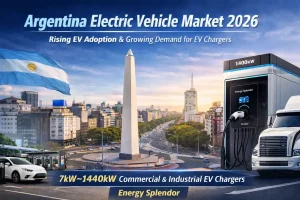
Argentina Electric Vehicle Market 2026 Rising EV Adoption & Growing Demand for High-Power EV Chargers from Energy Splendor
The electric vehicle (EV) market in Argentina is growing rapidly as the country embraces clean [...]
feb