

A Strategic B2B Guide for Investors, Fleet Operators, and Charging Network Developers
The global shift toward electrification is accelerating rapidly. By 2026, commercial EV charging infrastructure is no longer a “future opportunity” — it is a core investment sector for real estate developers, fleet operators, utilities, municipalities, and private investors.
For B2B buyers, understanding where the market is heading is critical for making smart procurement and deployment decisions. In this in-depth guide, we analyze 2026 EV charging infrastructure trends, growth projections, technology evolution, and commercial opportunities — with actionable insights for decision-makers.
1. Global EV Charging Market Overview in 2026
📈 Market Growth Momentum
By 2026:
-
Global EV sales continue double-digit growth annually
-
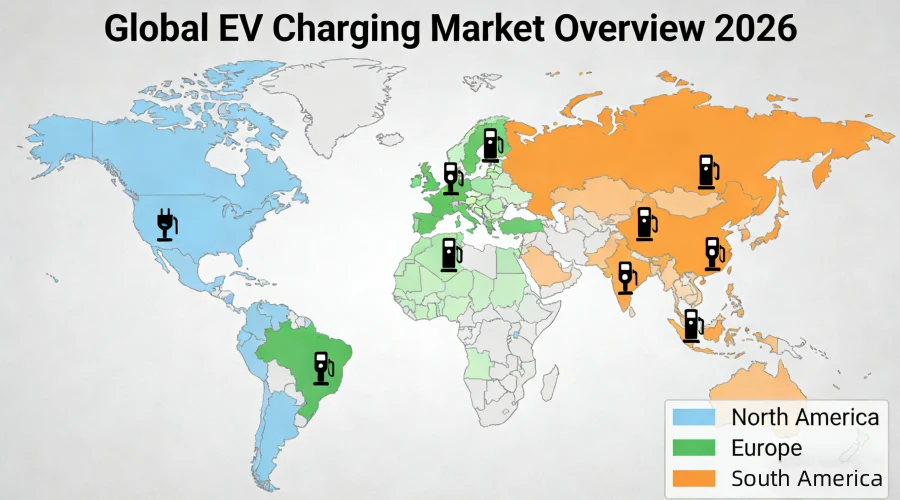
DC fast charging deployment is expanding rapidly across North America, Europe, and South America
-
Government incentives are shifting from vehicle subsidies to infrastructure expansion
-
Fleet electrification mandates are accelerating commercial charging demand
The commercial EV charging infrastructure market is now driven by:
-
Logistics and delivery fleet electrification
-
Public highway charging corridor development
-
Commercial real estate differentiation
-
Energy transition and ESG commitments
For B2B buyers, this means charging infrastructure is moving from optional to essential.
Learn More:Global EV Charging Infrastructure Trends 2026
2. Key 2026 Commercial EV Charging Trends
2.1 High-Power DC Fast Charging Becomes Standard
In 2026, the market is shifting toward:
-
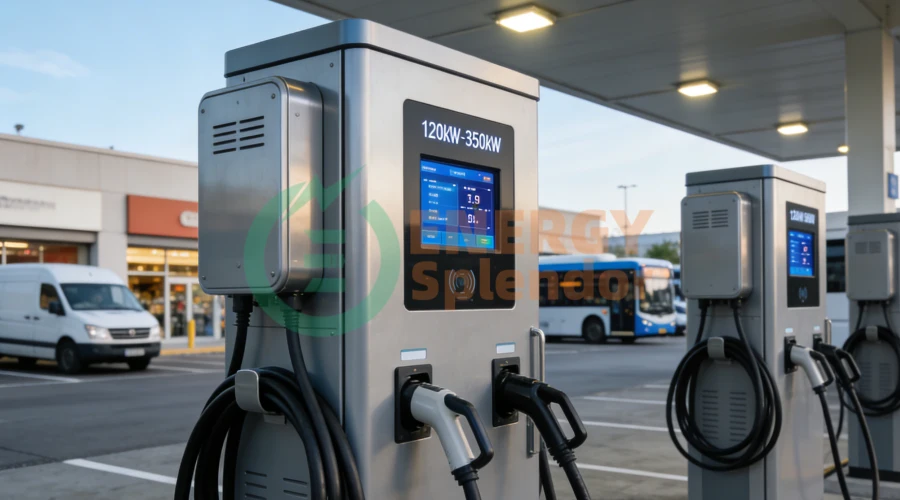
120kW – 240kW DC fast chargers for urban commercial sites
-
300kW+ ultra-fast chargers for highways and fleet depots
-
Modular power cabinets (30kW/40kW power modules scalable design)
Commercial operators prefer scalable DC charging platforms to expand capacity as utilization increases.
B2B Insight:
Modular DC charging systems reduce upfront CAPEX while allowing future expansion — critical for investors managing cash flow and ROI.
2.2 Fleet Electrification Drives Depot Charging Growth
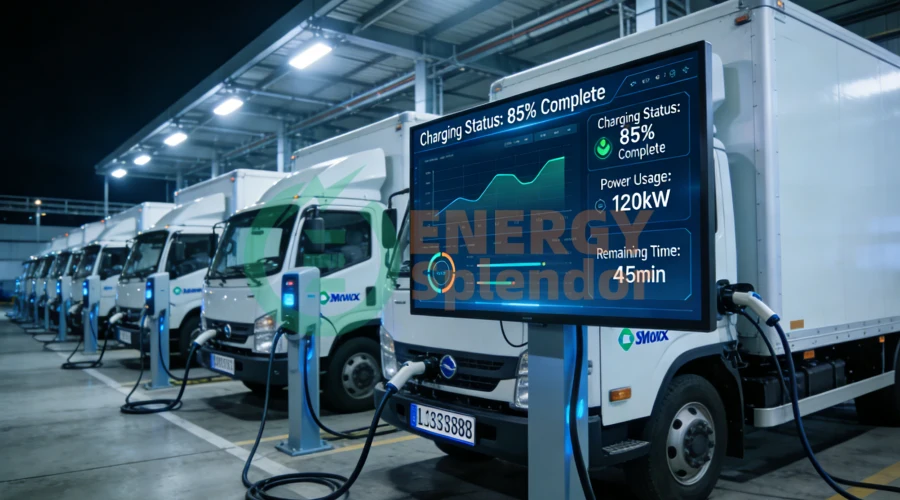
Logistics, public transportation, and last-mile delivery companies are electrifying fleets at scale.
Key requirements:
-
Load balancing and smart energy management
-
Overnight depot charging optimization
-
Integration with solar + battery storage
-
OCPP-compliant remote management systems
Fleet charging is becoming one of the fastest-growing segments of commercial EV charging infrastructure.
Opportunity:
Offering tailored fleet charging solutions positions suppliers as long-term infrastructure partners rather than hardware vendors.
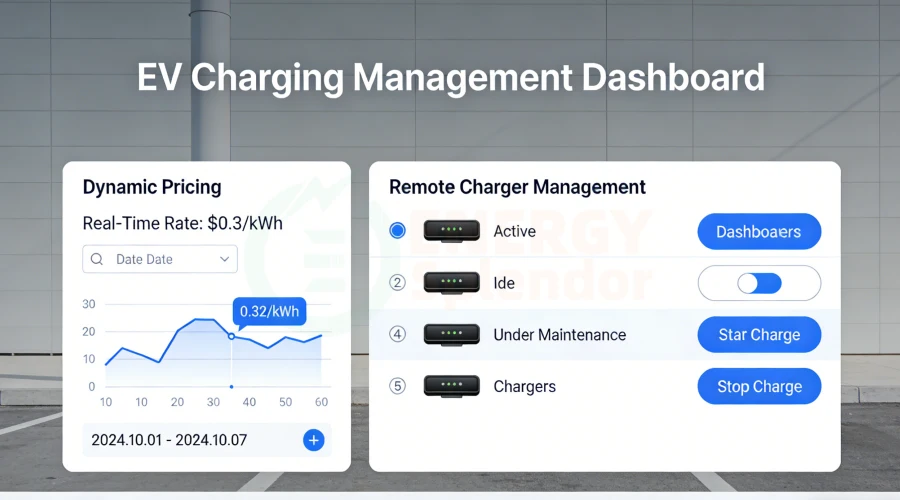
2.3 Smart Charging & Software Monetization
Hardware margins are tightening globally. Profitability increasingly depends on:
-
Charging management software
-
Dynamic pricing models
-
Subscription-based charging services
-
Data analytics and energy optimization
OCPP 1.6 and OCPP 2.0.1 compliance is now expected in serious commercial deployments.
Smart charging allows operators to:
-
Reduce peak demand charges
-
Optimize power distribution
-
Increase charger utilization rate
-
Monitor performance remotely
For B2B customers, selecting chargers with strong software ecosystem compatibility is essential.
2.4 Integration with Renewable Energy & Energy Storage
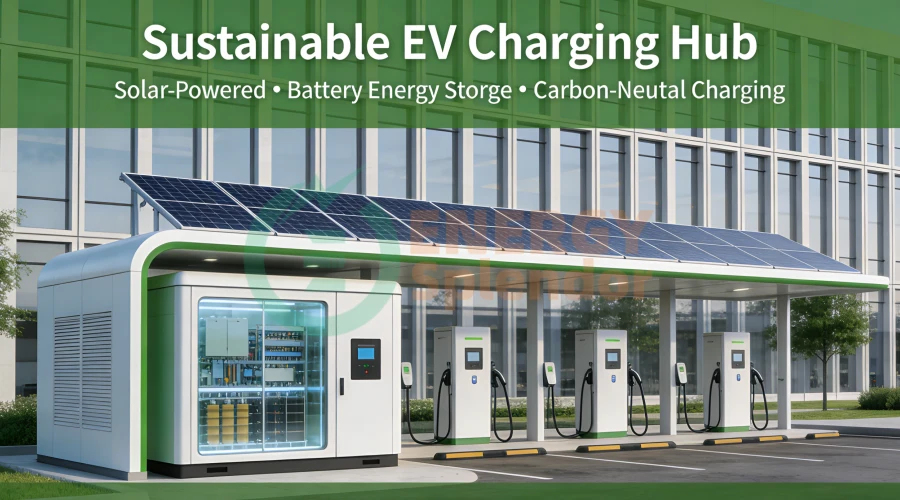
2026 marks a strong push toward:
-
Solar-powered charging stations
-
Battery energy storage integration
-
Microgrid-based EV charging hubs
Commercial property developers and industrial parks are increasingly combining:
Solar + Storage + DC Fast Charging
Benefits include:
-
Reduced electricity costs
-
Grid stability support
-
ESG branding advantage
-
Energy independence
This integrated energy model significantly improves long-term ROI.
Read More:Solar EV Charger: The Complete Guide for Homes, Businesses, and Global Importers
2.5 Standardization & Certification Requirements
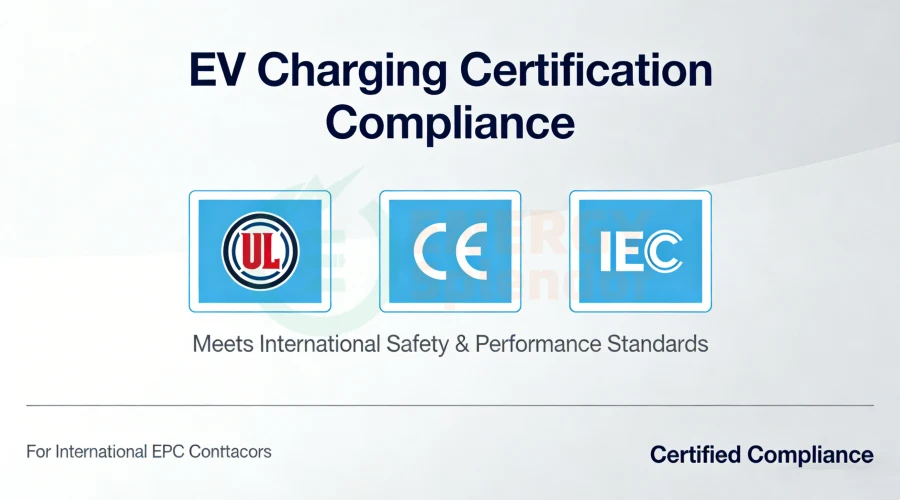
In 2026, compliance is non-negotiable for B2B projects.
Depending on region, commercial chargers often require:
-
UL certification (North America)
-
CE certification (Europe)
-
FCC compliance
-
IEC standards adherence
Large-scale commercial buyers prioritize manufacturers who can provide:
-
Full certification documentation
-
Grid compliance reports
-
Technical data sheets
-
Factory testing records
Certification capability increasingly determines supplier selection.
3. Regional Market Opportunities
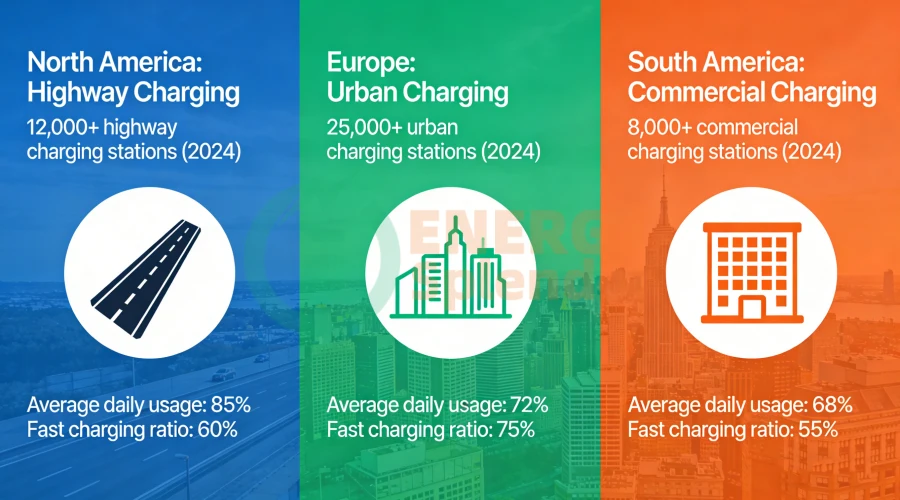
🇺🇸 North America
-
Strong federal infrastructure investment
-
Rapid expansion of highway DC charging
-
Fleet electrification mandates in multiple states
-
Growing adoption of high-power charging (180kW–350kW)
High demand for:
-
Commercial DC fast chargers
-
Dual-gun systems
-
OCPP-compatible network solutions
🇪🇺 Europe
-
Aggressive carbon neutrality targets
-
Urban low-emission zones driving EV adoption
-
Strong demand for 22kW AC + 120kW DC commercial systems
Commercial real estate owners increasingly deploy EV charging to increase property value.
🇦🇷 🇧🇷 🇨🇱 South America
-
Emerging but fast-growing EV markets
-
Increasing demand for cost-effective DC chargers
-
Strong interest in Chinese-manufactured charging solutions
B2B buyers prioritize:
-
Competitive factory pricing
-
Customization capability
-
Reliable after-sales technical support
4. 2026 Investment & ROI Outlook
Typical Commercial ROI Drivers:
-
Charging revenue per kWh
-
Site traffic increase (retail locations)
-
Fleet energy savings vs diesel
-
Government incentives
-
Demand charge management
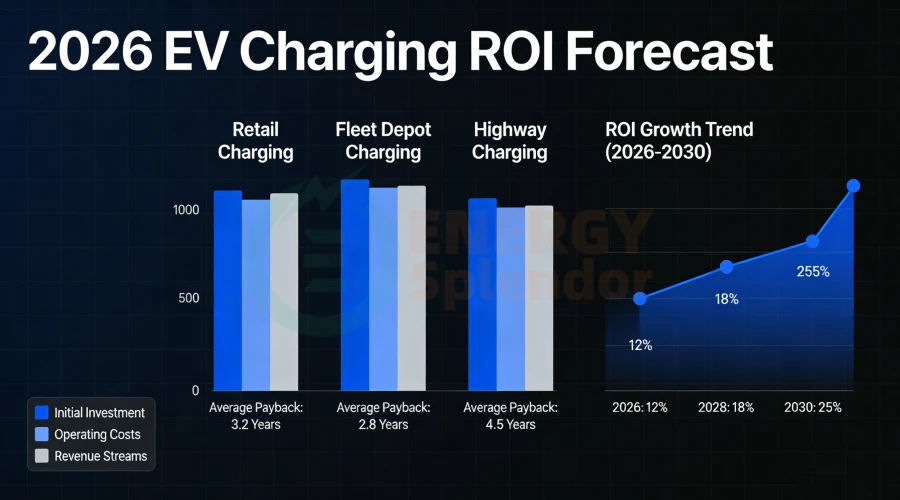
ROI Timeline (General Estimate):
-
Retail commercial sites: 2–4 years
-
Fleet depots: 1.5–3 years
-
Highway fast charging hubs: 3–5 years
ROI depends heavily on charger utilization rate and electricity cost optimization.
Strategic Insight:
High-quality, reliable chargers reduce maintenance downtime — which directly impacts long-term revenue.
5. What B2B Buyers Should Prioritize in 2026
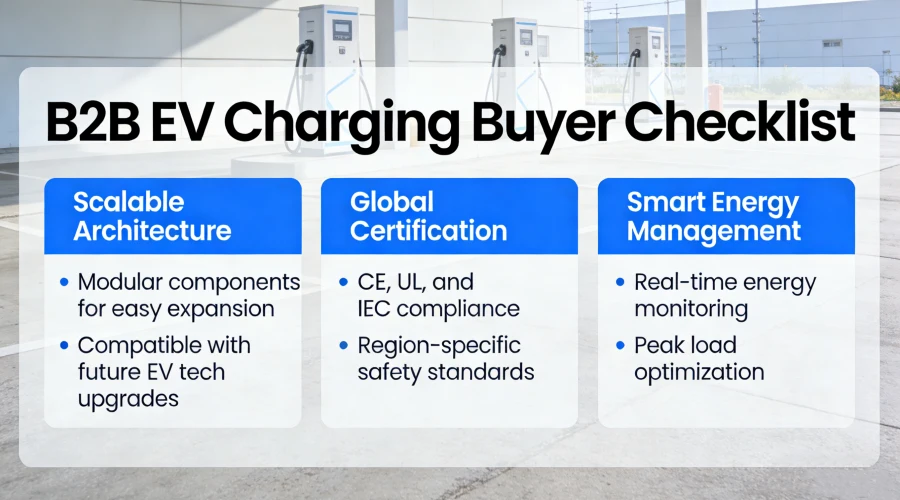
When selecting a commercial EV charging manufacturer, focus on:
✔ Scalable Power Architecture
Modular design allows flexible expansion.
✔ Global Certification Support
Essential for international projects.
✔ Smart Energy Management
Load balancing and peak shaving capabilities.
✔ Software Compatibility
OCPP 1.6 / 2.0.1 ready.
✔ Customization & OEM/ODM Capability
Branding, voltage adaptation, connector flexibility (CCS1, CCS2, NACS, GB/T).
✔ Factory Direct Pricing
Improves project profitability.
6. The Strategic Advantage of Partnering with a Manufacturing-Based Supplier
In 2026, many B2B buyers prefer working directly with manufacturers rather than trading intermediaries.
Benefits include:
-
Better pricing control
-
Engineering customization
-
Faster delivery timelines
-
Stronger technical communication
-
Long-term supply chain stability
For commercial EV charging infrastructure projects, supplier reliability is as important as hardware performance.
7. Final Outlook: 2026 Is a Deployment Year
The EV charging industry is transitioning from pilot projects to large-scale infrastructure rollout.
The winners in 2026 will be:
-
Fleet operators who deploy early
-
Property developers integrating charging strategically
-
Charging network operators focusing on smart energy management
-
B2B buyers choosing scalable, certified, and future-proof systems
Commercial EV charging infrastructure is no longer experimental — it is a core energy asset class.
Ready to Deploy Commercial EV Charging in 2026?
If you are:
-
A fleet operator
-
A charging network investor
-
A commercial property developer
-
A government infrastructure planner
-
A distributor or system integrator
Now is the time to secure scalable, certified, high-performance EV charging solutions.
Request technical datasheets, certification documents, and customized project proposals to evaluate the best-fit solution for your commercial deployment strategy.