



















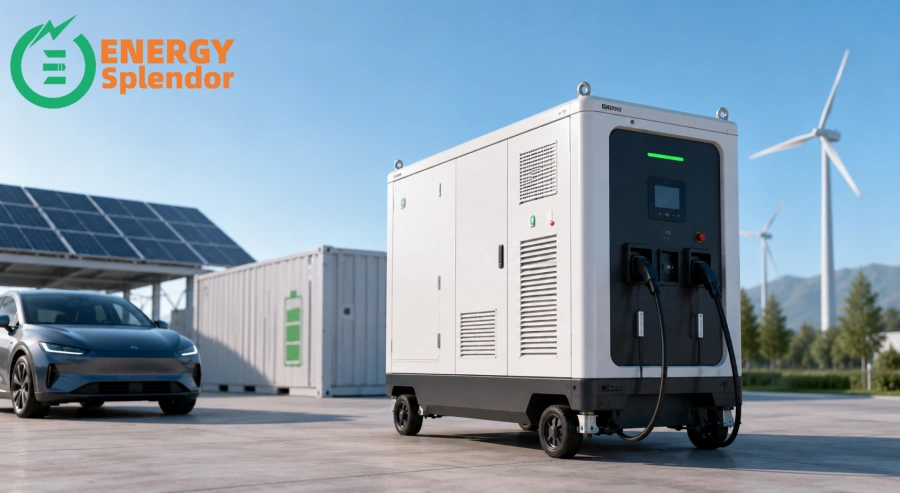
La clave para resolver las limitaciones de la red eléctrica, reducir los costos operativos y mejorar el retorno de inversión de las estaciones de recarga para vehículos eléctricos
El mercado mundial de vehículos eléctricos está entrando en una nueva etapa de rápido crecimiento. Al mismo tiempo, cada vez más operadores de estaciones de recarga, administradores de flotas, desarrolladores de propiedades comerciales e inversionistas en infraestructura se están dando cuenta de un desafío fundamental:
La mayor limitación para la expansión de la recarga de vehículos eléctricos ya no es la demanda, sino la capacidad de la red eléctrica.
Especialmente en el caso de los proyectos de carga rápida de corriente continua de alta potencia, muchas instalaciones se enfrentan a los mismos problemas:
- Capacidad limitada de la red eléctrica
- Costosas mejoras en los transformadores
- Plazos prolongados para la aprobación de servicios públicos
- Aumento de las tarifas por consumo máximo
- Impacto significativo en la red eléctrica debido a la recarga ultrarrápida
Estos desafíos son cada vez más comunes en:
- Áreas de servicio en las autopistas
- Centros logísticos
- Parques industriales
- Puertos y terminales
- Estacionamientos comerciales
A medida que evolucionan los mercados energéticos mundiales, la combinación de “recarga de vehículos eléctricos + sistemas de almacenamiento de energía en baterías (BESS)” se está imponiendo rápidamente como el modelo de infraestructura de recarga de próxima generación.
Las tendencias del sector demuestran cada vez más que el almacenamiento de energía ya no es solo un complemento opcional.
Por el contrario, se está convirtiendo en una solución clave para mejorar la rentabilidad de las estaciones de recarga, la flexibilidad de la red eléctrica y la sostenibilidad operativa a largo plazo.
Como fabricante mundial de equipos de recarga para vehículos eléctricos, el sitio web oficial de Energy Splendor está impulsando activamente los sistemas de recarga con almacenamiento de energía móvil y las soluciones integradas de energía solar, almacenamiento y recarga para los mercados internacionales.
Por qué el almacenamiento de energía está transformando la economía de la recarga de vehículos eléctricos
En el caso de las estaciones de carga rápida tradicionales, uno de los mayores gastos operativos a largo plazo no suele ser el cargador en sí, sino los costos de la electricidad.
En entornos de recarga de alta potencia, la recarga simultánea de vehículos puede generar picos de demanda enormes.
En muchos países, las facturas de electricidad para uso comercial se basan no solo en el consumo total de energía, sino también en la demanda máxima de potencia (cargos por demanda).
Esto significa:
Incluso los períodos cortos de alta actividad de recarga pueden aumentar significativamente los gastos anuales de electricidad.
Los sistemas de almacenamiento de energía en baterías están cambiando esta ecuación.
La reducción de picos de consumo está disminuyendo los costos operativos de las estaciones de carga
Los sistemas de almacenamiento de energía pueden suministrar electricidad durante los períodos de mayor demanda, lo que ayuda a los operadores a reducir la carga sobre la red eléctrica local.
Entre los principales beneficios se incluyen:
- Perfiles de demanda de energía más uniformes
- Menores cargos por demanda máxima
- Menor presión en la red
- Retrasos en la modernización de los transformadores
- Mayor escalabilidad del sitio
Para los operadores de estaciones de recarga, esto significa:
- Menores costos operativos a largo plazo
- Mayor rentabilidad
- Mayor capacidad de expansión
Esto resulta especialmente valioso para:
- Centros de carga ultrarrápida
- Estaciones de recarga para flotas comerciales
- Infraestructura de recarga para camiones eléctricos
- Logística e instalaciones portuarias
La energía solar, el almacenamiento y la recarga de vehículos eléctricos se están convirtiendo en el futuro
A medida que la energía solar se vuelve más accesible en todo el mundo, cada vez más proyectos de recarga de vehículos eléctricos están incorporando sistemas fotovoltaicos (PV).
Sin embargo, los sistemas tradicionales que funcionan únicamente con energía solar tienen una limitación importante:
- La energía solar se genera durante el día
- La demanda de recarga de vehículos eléctricos suele alcanzar su punto máximo por la noche
Sin almacenamiento, la energía solar excedente no se puede aprovechar al máximo.
Los sistemas de almacenamiento en baterías resuelven este problema de la siguiente manera:
- Almacenamiento de la energía solar generada durante el día
- Liberación de energía durante los períodos de mayor demanda de carga
- Aumentar el autoconsumo de energía renovable
- Reducir la dependencia de la red eléctrica pública
Como resultado, los sistemas integrados de “energía solar + almacenamiento + recarga de vehículos eléctricos” están creciendo rápidamente en toda Europa, América del Norte y los mercados emergentes de todo el mundo.
Los precios dinámicos de la electricidad están impulsando la demanda de almacenamiento
En Europa, América del Norte y muchos mercados energéticos en desarrollo, los precios de la electricidad se están volviendo cada vez más dinámicos.
Los sistemas de almacenamiento de energía permiten a los operadores:
- Almacenar electricidad durante los períodos de precios bajos
- Energía de descarga durante las horas de precio máximo
- Optimizar los costos de adquisición de energía
Para:
- Flotas comerciales de vehículos eléctricos
- Sistemas de transporte público
- Estaciones de recarga en autopistas
- Redes públicas de recarga
Esto genera importantes ventajas en cuanto al retorno de la inversión a largo plazo.
Serie Energy Splendor Ark: Solución móvil de almacenamiento de energía y recarga de vehículos eléctricos
Para satisfacer la creciente demanda de infraestructura flexible de recarga para vehículos eléctricos, Energy Splendor ha desarrollado el sistema móvil de recarga y almacenamiento de energía de la serie Ark.
La solución está diseñada específicamente para:
- Ubicaciones con restricciones de red eléctrica
- Instalaciones temporales de recarga
- Proyectos de construcción e ingeniería
- Operaciones de rescate de emergencia
- Tarifas para eventos comerciales
- Aplicaciones de carga rápida para flotas
y otros casos complejos de recarga.
¿Por qué elegir el sistema de carga móvil de la serie Ark?
Implementación rápida con una infraestructura mínima
La serie Ark incluye:
- Almacenamiento de energía en baterías
- Módulos de carga rápida de corriente continua
- Gestión inteligente de la energía (EMS)
- Sistemas avanzados de control térmico
sin necesidad de costosas ampliaciones de la red de transformadores ni de la construcción de infraestructura a gran escala.
Esto permite:
Implementación «plug-and-play» con instalación rápida.
Ideal para:
- Proyectos de recarga temporal
- Lugares remotos
- Corredores de peaje en autopistas
- Aplicaciones industriales
Tecnología de baterías LFP de alta seguridad
El sistema utiliza:
- Tecnología de baterías de fosfato de hierro y litio (LFP)
- Larga vida útil
- Diseño de seguridad de nivel industrial
- Alta estabilidad térmica
capaz de soportar la carga rápida continua de varios vehículos eléctricos.
Esto establece lo siguiente:
- Mayor confiabilidad operativa
- Mayor vida útil
- Menores costos de mantenimiento
Sistema inteligente de gestión de energía (EMS)
La serie Ark cuenta con una plataforma EMS inteligente que admite:
- Gestión del consumo energético en horas pico y fuera de horas pico
- Asignación dinámica de potencia
- Integración solar
- Equilibrio de carga inteligente
ayudando a los operadores a maximizar la eficiencia energética y a reducir los costos de electricidad.
Diseñado para entornos exteriores hostiles
El sistema incluye:
- Índice de protección IP55
- Refrigeración líquida inteligente / aire acondicionado
- Adaptabilidad a altas y bajas temperaturas
garantizando un funcionamiento estable en:
- Parques industriales
- Puertos y centros logísticos
- Estacionamientos al aire libre
- Entornos remotos y fuera de la red eléctrica
Admite el flujo bidireccional de energía V2G y V2L
La serie Ark es más que un simple cargador para vehículos eléctricos.
También es compatible con:
- Vehículo a la red (V2G)
- Vehículo a carga (V2L)
lo que permite una distribución flexible de la energía entre los vehículos, los equipos y la red eléctrica.
El almacenamiento de energía está redefiniendo la industria de la recarga de vehículos eléctricos
En el futuro, la competencia en el sector de la infraestructura de recarga de vehículos eléctricos ya no se centrará únicamente en la velocidad de recarga.
Por el contrario, el éxito dependerá de:
- Una gestión energética más inteligente
- Menores costos operativos
- Mayor adaptabilidad a la red eléctrica
- Mayores rendimientos de las inversiones
Los sistemas de almacenamiento de energía en baterías están pasando rápidamente de ser un equipo opcional a convertirse en un componente fundamental de la infraestructura de recarga de vehículos eléctricos de próxima generación.
Construye la próxima generación de infraestructura de recarga para vehículos eléctricos con Energy Splendor
Como fabricante global de soluciones de recarga para vehículos eléctricos y de almacenamiento de energía, Esplendor energético establece lo siguiente:
- Estaciones de carga rápida de corriente continua
- Sistemas móviles de almacenamiento y recarga de energía
- Soluciones integradas de energía solar, almacenamiento y recarga
- Soluciones de recarga para flotas comerciales
- Servicios de personalización OEM/ODM
Si estás buscando:
- Proyectos de recarga de vehículos eléctricos con mayor retorno de inversión (ROI)
- Soluciones flexibles de carga para dispositivos móviles
- Menor dependencia de la red eléctrica
- Infraestructura libre de carbono y preparada para el futuro
Póngase en contacto hoy mismo con el equipo de Energy Splendor para conocer las soluciones personalizadas de recarga de vehículos eléctricos y almacenamiento de energía para su mercado.