



















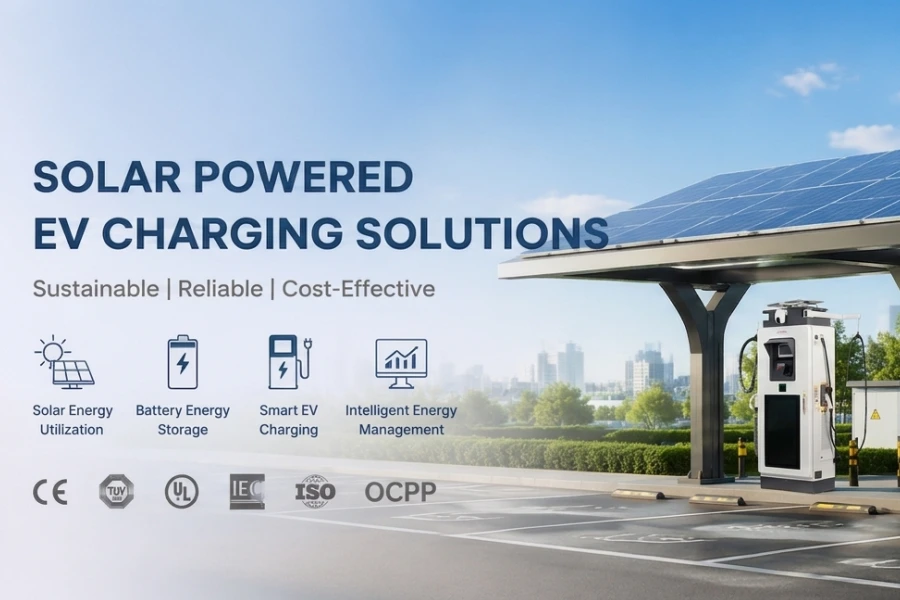
Solar Powered EV Charger: Building the Future of Renewable EV Charging Infrastructure
The rapid adoption of electric vehicles is transforming global transportation infrastructure. However, the increasing demand for EV charging creates new challenges for businesses, fleet operators, and charging network developers.
High-power EV charging stations require significant electricity capacity, and traditional grid-only charging solutions may face problems such as:
- High electricity costs
- Limited grid capacity
- Expensive infrastructure upgrades
- Increased carbon emissions
A solar powered EV charger provides a sustainable alternative by combining renewable energy generation with intelligent EV charging technology.
Unlike conventional EV chargers that rely entirely on grid electricity, modern solar EV charging systems integrate:
- Solar photovoltaic (PV) generation
- Battery Energy Storage System (BESS)
- EV charging stations
- Energy Management System (EMS)
This integrated approach creates a flexible and scalable Solar + Storage + EV Charging solution for commercial and industrial applications.
What Is a Solar Powered EV Charger?
A solar powered EV charger is an electric vehicle charging system that uses solar energy generated from photovoltaic panels to supply power for EV charging.
Depending on project requirements, solar charging systems can operate in several configurations:
1. Solar Direct Charging
Solar energy is directly supplied to EV chargers during daylight hours.
Typical applications:
- Office buildings
- Hotels
- Residential communities
- Workplace charging
2. Solar + Grid Hybrid Charging
The system combines solar energy with utility power.
When solar production is insufficient, grid electricity automatically supports EV charging.
Advantages:
- Reliable charging availability
- Reduced electricity costs
- Simple system design
3. Solar + Battery Storage + EV Charging
This is the preferred solution for commercial and industrial projects.
The system includes:
- Solar PV system
- Battery storage cabinets
- Hybrid inverter / PCS
- EMS platform
- DC fast charging stations
Benefits:
- Energy storage during low-demand periods
- Peak shaving
- Reduced grid dependency
- Higher renewable energy utilization
How Does a Solar Powered EV Charging System Work?
A complete solar EV charging infrastructure consists of several key components.
1. Solar PV Generation System
Solar panels convert sunlight into electrical energy.
Solar installations can include:
- Rooftop solar
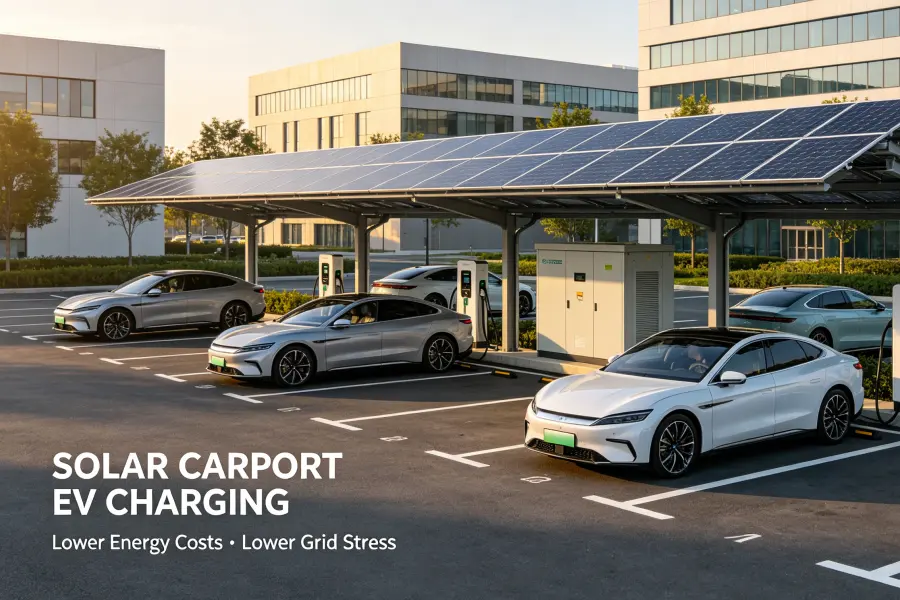
- Solar carports
- Ground-mounted PV systems
Typical commercial solar capacity:
| Application | Solar Capacity |
|---|---|
| Small commercial charging | 50kWp – 150kWp |
| Fleet charging station | 200kWp – 500kWp |
| Large charging hub | 500kWp – 2MWp+ |
2. Battery Energy Storage System (BESS)
Battery storage allows excess solar energy to be stored and used when needed.
A BESS typically includes:
- Lithium battery modules
- Battery Management System (BMS)
- Power Conversion System (PCS)
- Thermal management
- Fire protection system
Typical commercial configurations:
| Application | Battery Capacity |
|---|---|
| Small EV charging site | 100kWh – 300kWh |
| Fleet charging depot | 500kWh – 2MWh |
| Highway charging hub | 1MWh – 5MWh |
Battery storage helps:
Reduce Peak Demand Charges
Commercial electricity prices often include demand charges based on maximum power consumption.
BESS can discharge during charging peaks to reduce grid demand.
Support High-Power Charging
A charging station with multiple DC fast chargers may require hundreds of kilowatts of power.
Battery storage provides additional power without requiring expensive grid expansion.
Enable Renewable Energy Utilization
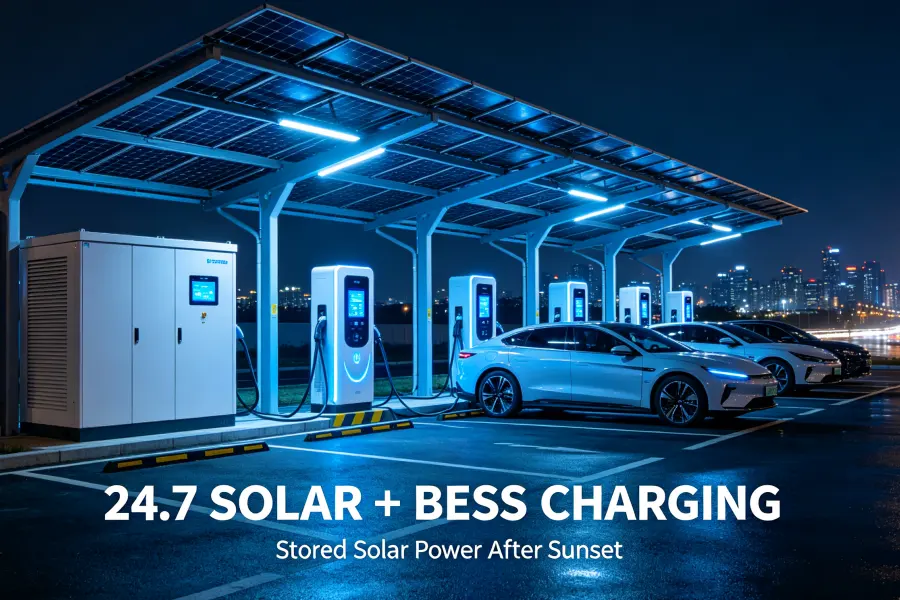
Solar energy generated during the day can be stored and used:
- During evening charging
- During cloudy weather
- During high electricity price periods
3. EV Charging Equipment
The charging station delivers electricity from the energy system to electric vehicles.
Different applications require different charging levels.
AC EV Chargers
Typical power:
- 7kW
- 11kW
- 22kW
- 44kW
Applications:
- Hotels
- Offices
- Shopping centers
- Residential charging
DC Fast EV Chargers
Typical power:
- 60kW
- 120kW
- 180kW
- 240kW
- 360kW+
Applications:
- Commercial charging stations
- Fleet depots
- Logistics centers
- Public charging networks
Ultra-Fast Charging Systems
Power range:
- 480kW
- 720kW
- 960kW
- 1440kW
Applications:
- Highway charging hubs
- Heavy-duty electric trucks
- Large-scale charging networks
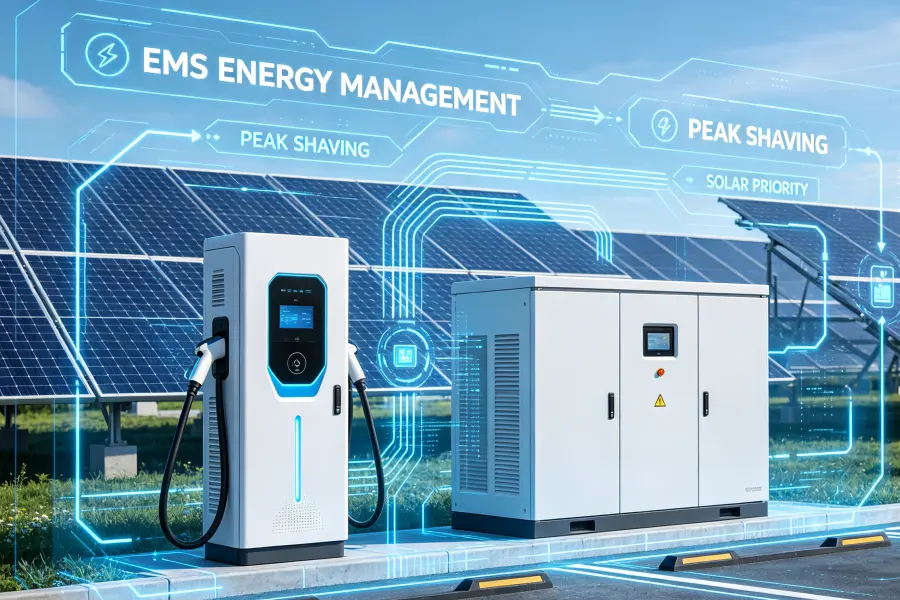
4. Energy Management System (EMS)
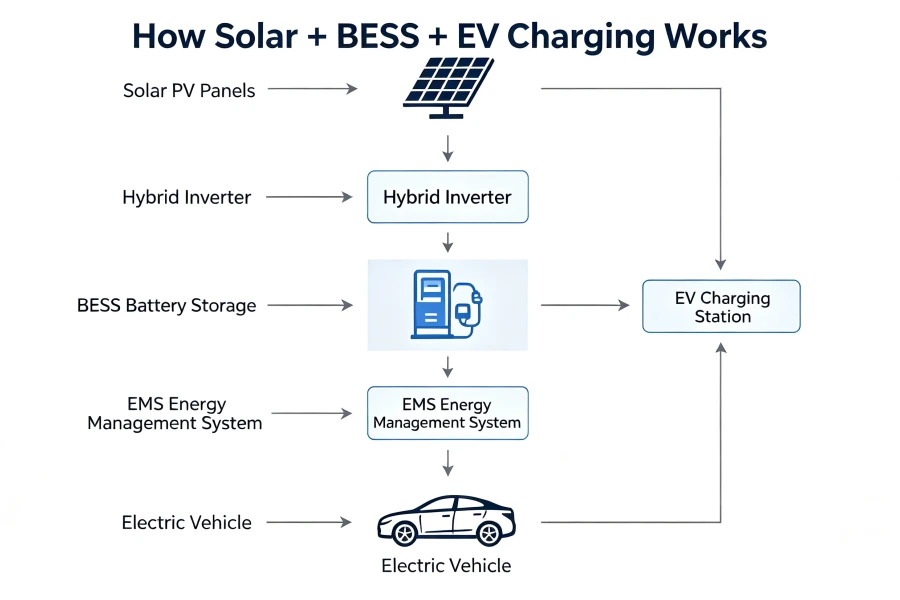
The EMS is the intelligent control center of the solar EV charging system.
It manages energy flow between:
- Solar PV
- Battery storage
- Grid
- EV chargers
Key functions include:
Smart Energy Scheduling
Prioritize renewable energy usage.
Example:
Solar → EV Charging → Battery Storage → Grid
Dynamic Load Balancing
Automatically distributes available power among multiple chargers.
Remote Monitoring
Operators can monitor:
- Charging status
- Energy consumption
- Solar generation
- Battery status
- System performance
OCPP Integration
Commercial charging systems commonly support:
- OCPP 1.6
- OCPP 2.0
for connection with charging management platforms.
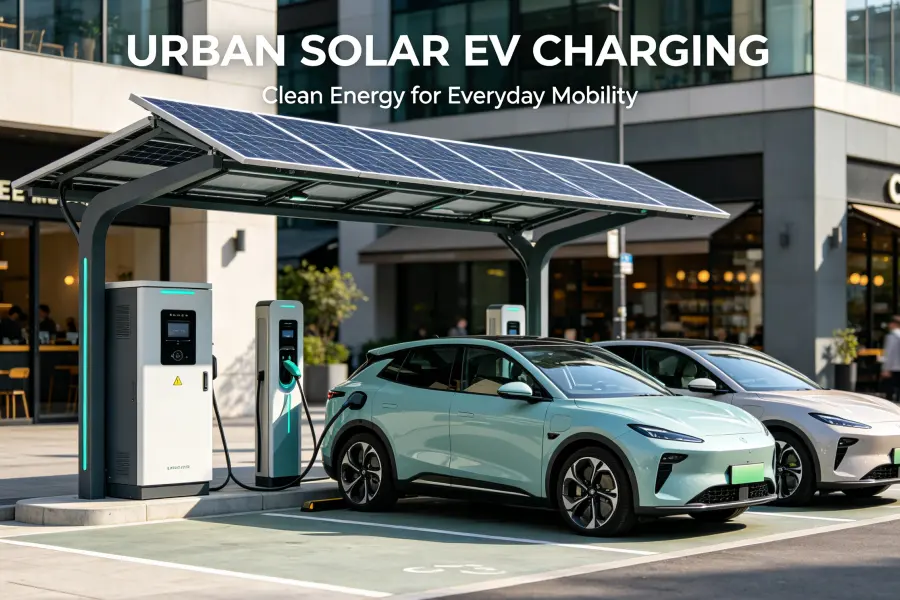
Solar Powered EV Charger System Architecture
A typical commercial solar EV charging system includes:
Solar Powered EV Charger vs Grid-Only EV Charging
| Feature | Grid EV Charging | Solar EV Charging System |
|---|---|---|
| Energy Source | Utility Grid | Solar + Grid + Battery |
| Electricity Cost | Higher | Reduced |
| Carbon Emission | Higher | Lower |
| Grid Dependency | High | Reduced |
| Peak Demand Management | Limited | Available |
| Renewable Energy Usage | No | Yes |
| Suitable for Large Projects | Limited | Excellent |
Commercial Applications of Solar EV Charging Stations
1. Fleet Charging Infrastructure
Electric fleets require reliable and cost-effective charging.
Typical configuration:
- Solar PV: 200kWp–500kWp
- Battery Storage: 500kWh–2MWh
- DC Chargers: 120kW–480kW
Applications:
- Logistics companies
- Delivery fleets
- Electric buses
- Commercial transportation
2. Solar EV Charging for Commercial Buildings
Businesses can use solar charging stations to:
- Provide customer charging
- Reduce electricity costs
- Improve sustainability image
Applications:
- Shopping malls
- Hotels
- Office buildings
- Retail centers
3. Industrial Parks and Manufacturing Facilities
Industrial facilities often have:
- Large electricity consumption
- Available rooftop space
- EV fleet demand
Solar + storage + charging systems can integrate with existing energy infrastructure.
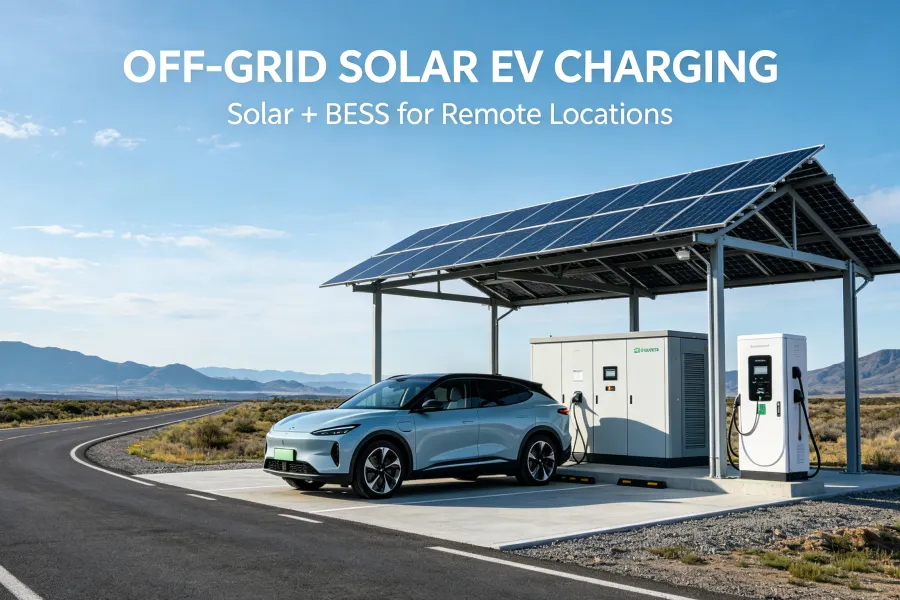
4. Highway Solar Charging Hubs
Large charging networks require:
- High charging power
- Grid stability
- Renewable energy integration
Typical configuration:
- Solar PV: 500kWp–2MWp
- BESS: 1MWh+
- Ultra-fast chargers: 360kW–1440kW
How to Size a Solar EV Charging System?
System design depends on:
Charging Demand
Important factors:
- Number of vehicles
- Daily charging energy
- Charging schedule
- Peak charging period
Example:
A fleet charging station:
- 20 electric vehicles
- Daily energy demand: 1,000kWh
may require:
- 250kWp–400kWp solar PV
- 500kWh–1MWh BESS
- Multiple DC fast chargers
International Standards for Solar EV Charging Infrastructure
Commercial EV charging projects typically require compliance with:
- IEC 61851 EV Charging Standard
- IEC 62196 Charging Connectors
- ISO 15118 Vehicle Communication
- OCPP 1.6 / OCPP 2.0
- CE Certification
- UL / cUL Certification
For global projects, selecting certified equipment ensures:
- Safety
- Compatibility
- Long-term reliability
Choosing the Right Solar Powered EV Charger Supplier
When selecting a solar EV charging solution provider, consider:
Engineering Capability
A professional supplier should provide:
- System design
- Load analysis
- Solar sizing
- Battery configuration
- Charging solution planning
Product Portfolio
A complete provider should support:
- AC EV chargers
- DC fast chargers
- Battery storage systems
- EMS platforms
Project Experience
Experience with:
- Commercial charging stations
- Fleet projects
- Renewable energy integration
- International standards
Energy Splendor Solar EV Charging Solutions
Energy Splendor provides integrated renewable energy and EV charging infrastructure solutions for global commercial and industrial projects.
Our solutions combine:
- Solar PV systems
- Battery Energy Storage Systems
- AC and DC EV Chargers
- Intelligent EMS platforms
We support:
✓ Commercial EV charging stations
✓ Fleet charging infrastructure
✓ Solar charging hubs
✓ Industrial energy solutions
✓ Renewable energy integrated microgrids
From system design to equipment supply, Energy Splendor helps customers build reliable and scalable solar powered EV charging infrastructure.
Request Your Customized Solar EV Charging Solution
Planning a solar powered EV charging station project?
Contact Energy Splendor for:
- Customized system design
- Equipment recommendations
- Commercial project solutions
- OEM and integration support
Build the next generation of renewable EV charging infrastructure with Energy Splendor.